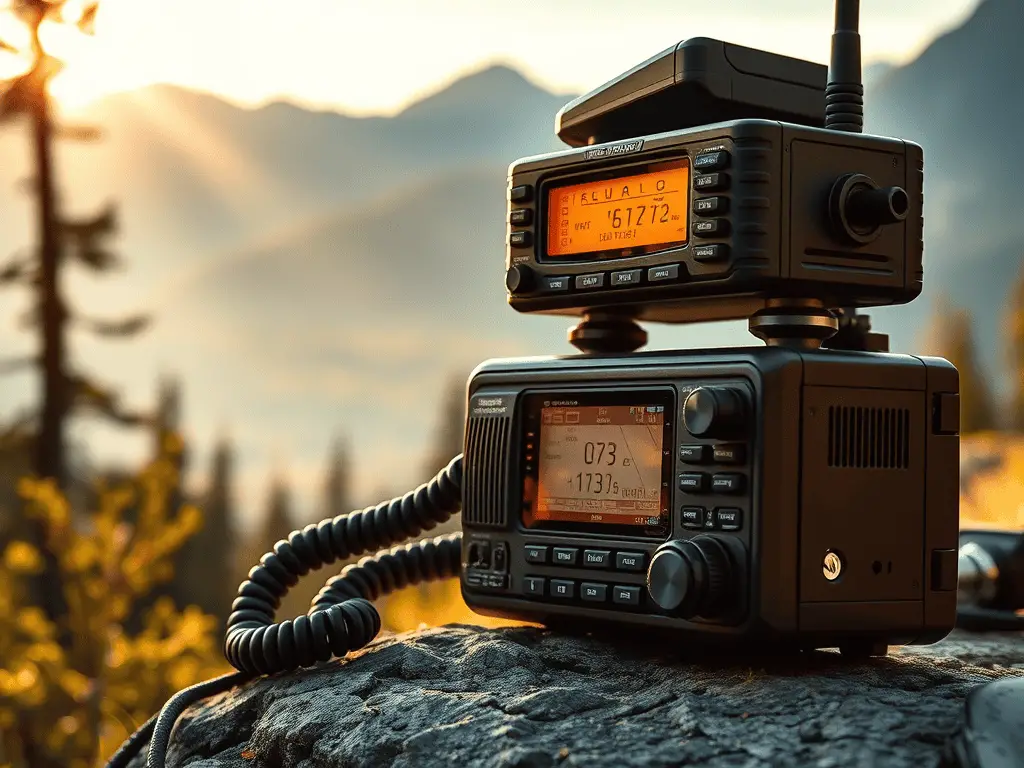
Ham radios let people talk over long distances without needing cell phones or the internet. They use radio waves, connecting users locally or even across continents.
Outdoor enthusiasts, emergency responders, and hobbyists rely on ham radios because they stay working when other options fail. These radios are a lifeline when you’re off the grid or in a pinch.
If you want the best ham radio for long-distance, pay attention to things like frequency range, power output, and antenna quality. Some radios only handle short-range, while others are built to reach much farther.
The type of band matters too. HF (high frequency) bands, for example, help signals travel a lot farther than VHF or UHF.
What you pick depends on how you plan to use it and the range you really need. Portability, how easy it is to use, and durability also play big roles.
We tried out a bunch of different models to find ham radios that balance power and features, making sure you get reliable long-distance communication.
Best Ham Radios for Long Distance
We’ve checked out a range of ham radios that do well over long distances. Our list highlights models with strong signals, useful features, and good value for both beginners and experienced folks.
Here are some options worth considering if you want to step up your long-distance communication game.
Baofeng AR-5RM Long Range Ham Radio

This radio is a solid pick if you want reliable long-distance communication and easy charging.
Pros
- Strong, clear signal over several miles
- Multiple charging options, including USB-C
- Simple frequency copying saves time
Cons
- Battery lasts about 6 hours, so you might need spares
- Feels a bit heavy after a while
- Reception isn’t always better than some older models
We found the Baofeng AR-5RM easy to use, mostly because of the big color screen. Programming channels was less of a pain thanks to the frequency copy feature.
Switching frequencies during our outdoor trips felt smooth and quick. Carrying these radios felt a little bulky, but the grip is decent and the charging options are super handy.
We could top off the batteries from USB ports or wall outlets, which saved us more than once. Getting weather alerts from NOAA worked well enough, especially while hiking.
It’s not the best for deep wilderness, but for most camping or hunting trips, it gets the job done.
Baofeng UV-5R

This radio is great if you want an affordable, dual-band ham radio that can handle long-distance communication.
Pros
- Clear reception at long range
- Easy programming with CHIRP
- Comes with a full kit of accessories
Cons
- Charging takes a while
- Setup can be tricky at first
- Not waterproof
We tried the Baofeng UV-5R during a camping trip. The range was solid for a few miles, and sound quality stayed clear, which made us feel safer and more connected.
The dual-band feature let us switch between VHF and UHF easily. Programming channels by hand took a little practice, but using CHIRP software sped things up a lot.
Charging was slow, so we always carried extra batteries. Just remember, it’s not water resistant, so keep it dry. For the price and performance, it’s a good pick for serious ham users.
Cobra RX680 Walkie Talkies

These radios are a good fit for outdoor use when you need a decent connection in most conditions.
Pros
- Rugged build stands up to rain and drops
- Long range in open areas (claimed up to 38 miles)
- NOAA weather alerts and flashlight add safety
Cons
- Range drops with trees and buildings
- Battery life is just okay for longer trips
- Signal loss past a couple miles in cities
We brought these radios on a few camping trips. The tough design stood up to rain and a few tumbles, and the splashproof feature meant we didn’t worry much in wet weather.
In wide open spaces, the range was impressive. But in the woods or around buildings, it dropped off fast. For hiking or family outings, the connection stayed stable enough, but don’t count on the full 38 miles unless you’re somewhere flat and empty.
We liked the NOAA alerts and built-in flashlight. The vibrate alert was handy, so we didn’t miss calls even if the radio wasn’t in sight. If you want simple, reliable radios for outdoor use, these will do—just keep your expectations realistic in rough terrain.
Baofeng UV-5RM

This radio gives you reliable long-distance communication, solid battery life, and lots of charging options.
Pros
- 10W output for clear long-range signals
- USB Type-C and other charging options
- Easy one-click frequency copying
Cons
- Hand mics are sometimes faulty
- Buttons and menus can feel cramped
- Bulkier than basic walkie talkies
We tested the Baofeng UV-5RM in a few different spots. The 10-watt power boost made a clear difference, especially with longer antennas.
It stayed clear on hills and open fields, which makes it a good fit for outdoor use. Charging was easy with USB Type-C, and the 2500mAh battery lasted through long days.
We liked being able to use car chargers or power banks. Setting up channels was fast with frequency copying, which helped when working with new groups.
The hand mic didn’t always work out of the box, which was frustrating. The controls felt tight, but it’s manageable once you get used to it. If you want power and flexibility without too much hassle, this one’s a solid choice for camping, hiking, or work.
Baofeng AR-152 Long Range Ham Radio

This radio is a good pick if you want reliable long-distance communication, strong battery life, and a tough build.
Pros
- Strong signal, even inside buildings
- Long battery life with big capacity
- Multiple charging options
Cons
- Bulky because of the large battery
- Not water resistant
- Actual power output may not match the ads
We started using the Baofeng AR-152 right out of the box. It feels sturdy and can take a few drops without any issues, which is great for outdoor or emergency use.
The battery life really stood out, especially on longer trips where charging isn’t always possible. Foldable tactical antennas helped the range in both city and rural spots.
Programming was easy with the included cable and CHIRP software. It’s bulkier than some models, but the strong signal and extra battery make up for it if you need long-distance communication.
Buying Guide
When we look for the best ham radio for long distance, we focus on features that boost signal strength and clarity. Power output matters—a radio with more watts can reach farther stations.
We recommend at least 50 watts for better range, if you can swing it. Frequency bands are important too. Radios that support multiple bands give you more ways to connect, no matter the conditions.
HF bands are the go-to for real long-distance talking. Portability is huge if you need to move your radio, but bigger radios usually have better power and antennas.
It’s all about finding that balance between size and performance for your needs. User interface is another big one—clear displays and simple controls help, especially if you’re new to ham radios.
Some radios let you save favorite frequencies, which is handy. Here’s a quick table to compare the most important features:
| Feature | Why It Matters |
|---|---|
| Power Output | Higher watts reach longer distances |
| Frequency Bands | More bands equal more communication options |
| Portability | Easier to carry vs. more powerful units |
| User Interface | Simple controls make operation easier |
| Antenna Type | Better antenna improves signal quality |
Good battery life is a must if you’re outdoors. A tough build is important if you’ll be in rough environments. All these things help us pick the right ham radio for long-distance needs.
Frequently Asked Questions
We look for radios with strong signal clarity and extended range. Power output, antenna quality, and radio type all play a part in long-distance communication.
What are the top-performing handheld ham radios for extended range communications?
Handheld radios like the Yaesu FT-65R and the BaoFeng UV-5X both offer good range and clear reception. They usually run at 5 watts, but you can reach farther with a quality antenna.
Which ham radio base stations offer the best long-range capabilities?
The Icom IC-7300 and Kenwood TS-590SG stand out for strong signals and reliable long-distance operation. Both can hit the full legal power limit, usually up to 100 watts.
They cover a bunch of frequency bands, which really helps when you’re trying to reach far-off stations.
How do different wattages affect the range of ham radios?
Cranking up the wattage usually gets you more range, but it does eat up more power. A 5-watt handheld just can’t compete with a 100-watt base station, especially if the antennas and conditions are pretty much the same.
What features should preppers look for in a ham radio for reliable long-distance contacts?
Look for radios that can take a beating, cover multiple bands, and have adjustable power settings. Good battery life is huge, especially if you’re prepping for emergencies.
NOAA weather alerts and built-in emergency channels—honestly, those are features you don’t want to skip.
Can you recommend entry-level ham radios that are suitable for long-distance use?
The BaoFeng UV-5R is a go-to starter radio. It’s dual-band and puts out decent power for the price.
I’d also check out the Yaesu FT-4XR. It’s easy to use, and the signal clarity is surprisingly solid for beginners.
What is the average distance coverage for ham radios with 100-watt power output?
With a solid antenna and open conditions, 100-watt radios often reach several hundred miles. Of course, the actual range depends on terrain, weather, and the frequency you pick.