You just passed your ham radio exam (or you’re about to), and now you’re staring at a wall of radios with names like “UV-5R”, “FT-65”, and “IC-7300” — and absolutely no idea where to start. Don’t worry. This happens to everyone.
Here’s the honest answer to “what radio should I buy first?” — and more importantly, why.
Start With a Handheld Radio (Also Called an HT)
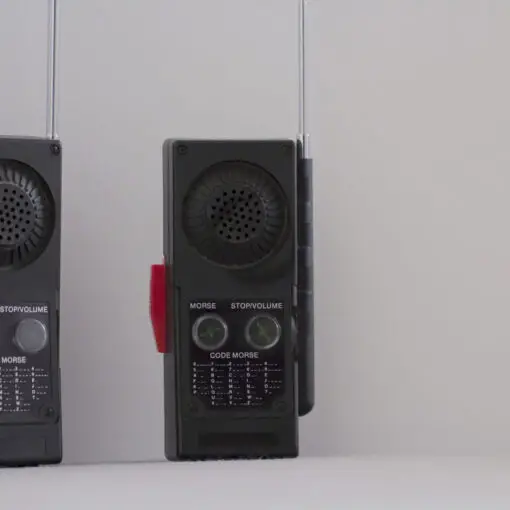
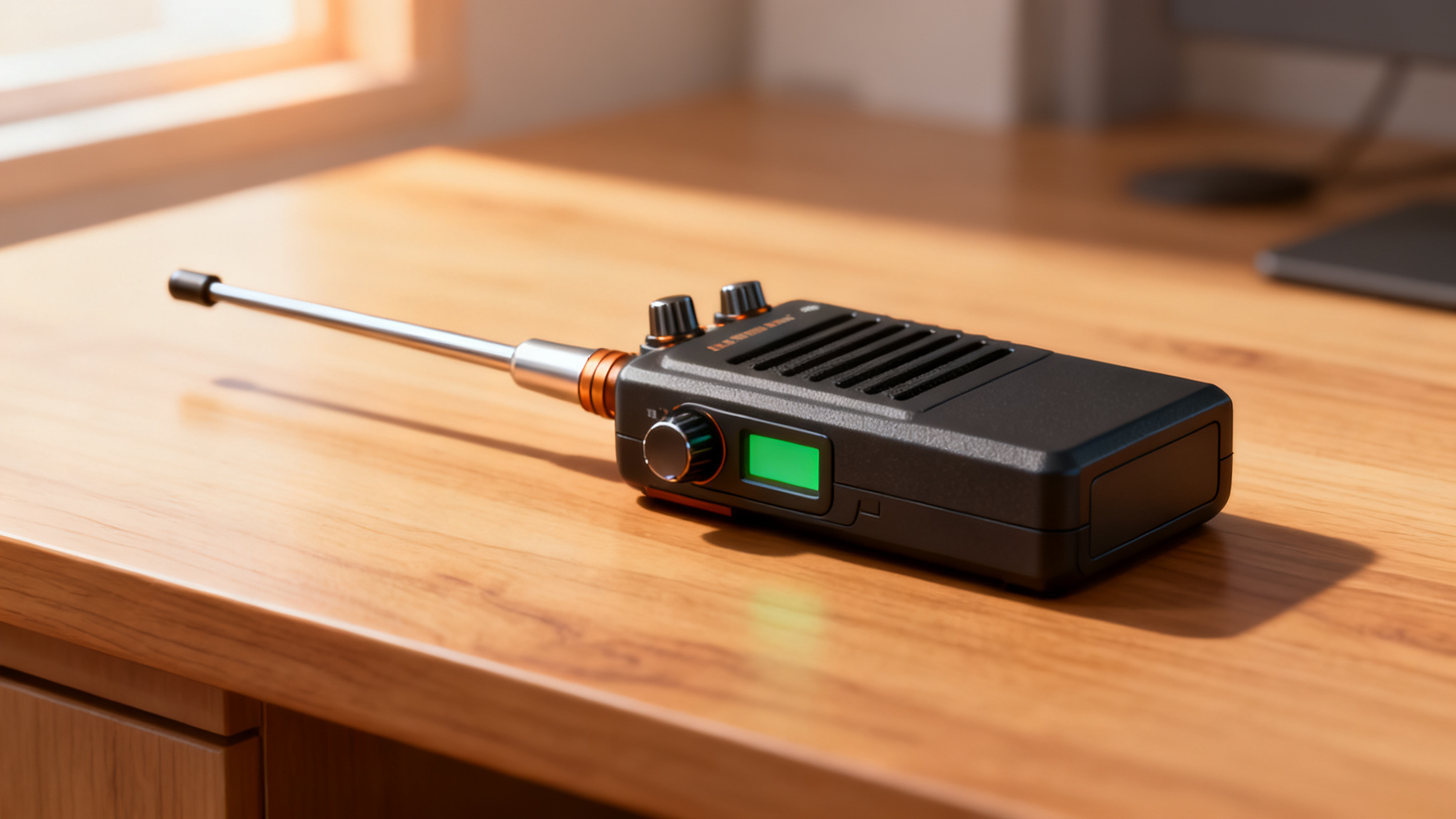
Your first radio should almost certainly be a handheld transceiver — called an HT (short for Handie-Talkie, which is somehow both a technical term and the most adorable name in radio history).
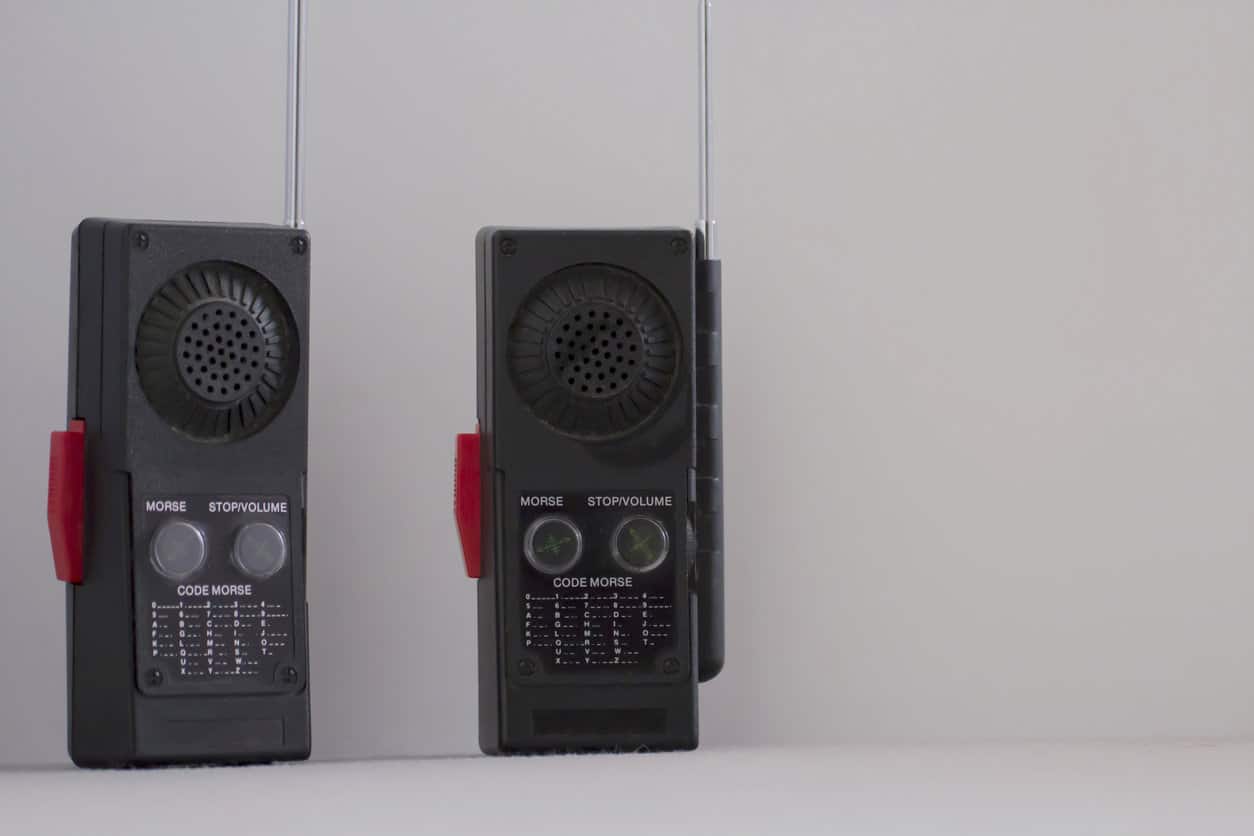
An HT is a small, battery-powered radio you can hold in your hand. Think walkie-talkie, but you can actually talk to people miles away using local repeaters — towers that pick up your signal and rebroadcast it across a much wider area.
Here’s why an HT is the right first radio:
- It’s cheap. You can get a solid HT for $30–$150. No need to spend hundreds before you know if you even like the hobby.
- It’s simple. Turn it on, find a local repeater frequency, listen. That’s it to start.
- It works with your Technician license. Your entry-level license gives you full access to the VHF and UHF bands — exactly where HTs operate.
- It’s portable. Take it hiking, keep it in the car, bring it to emergencies. HTs are genuinely useful outside of ham radio too.
Which HT Should You Actually Buy?
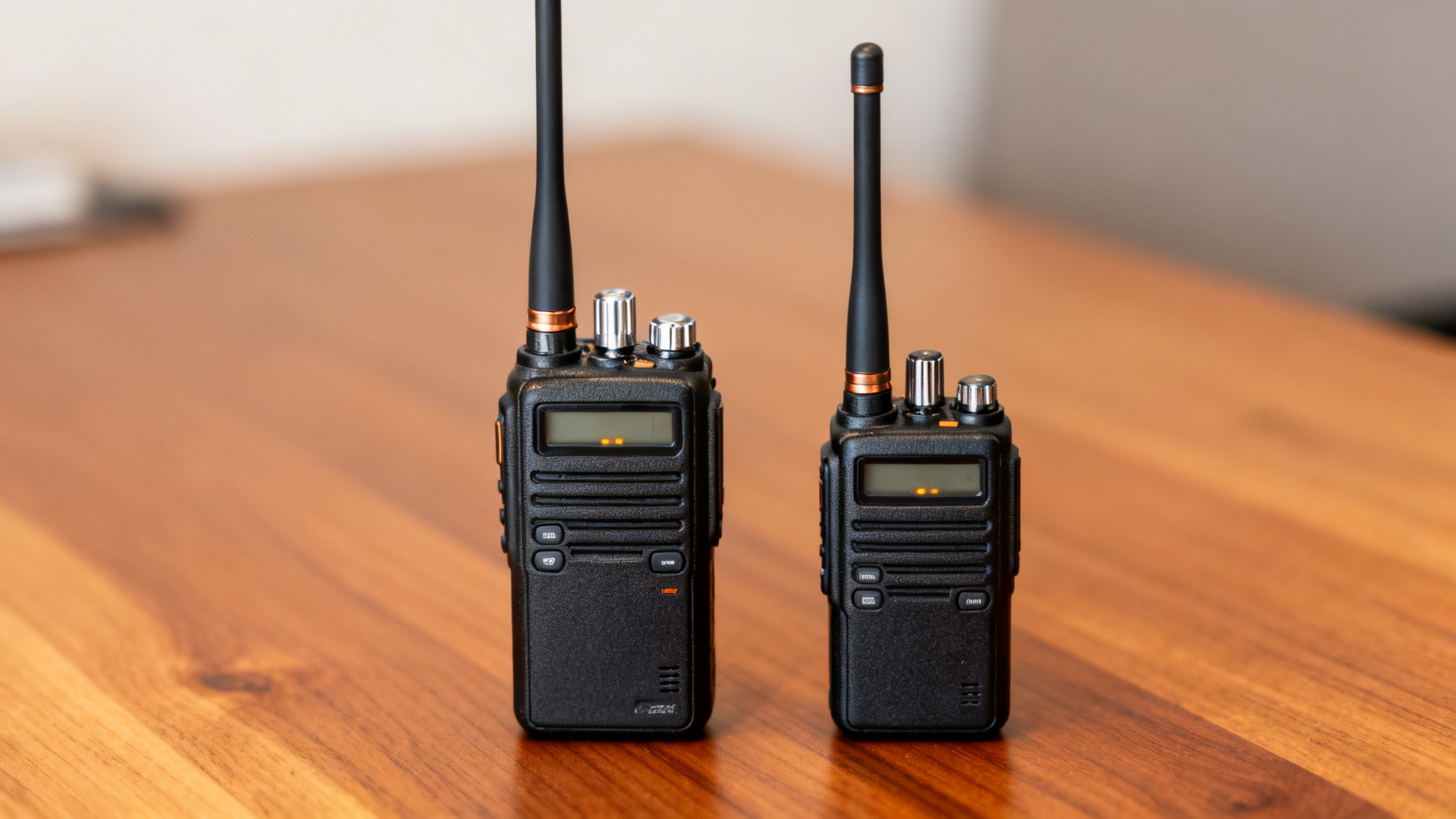
Two radios come up in almost every “first radio” conversation. Here’s the honest breakdown:
Baofeng UV-5R — Around $30
The Baofeng UV-5R is the radio everyone recommends when someone asks “what’s the cheapest way to get started?” It works. It’s not pretty, the menu system is a bit like navigating a 1990s microwave, but it transmits and receives just fine. For $30, it’s hard to argue with.
The catch: the stock antenna isn’t great, and customer support is basically non-existent. But as a starter radio to learn on? Perfectly fine.
Yaesu FT-65 — Around $100
The Yaesu FT-65 is what you buy when you want something that feels like a proper radio. Better build quality, easier to program, and Yaesu is a brand that’s been making ham radios since before most of us were born. If you’re willing to spend a bit more, this is a better long-term buy.
Our pick for most beginners: If budget is tight, get the Baofeng. If you can stretch to $100, get the Yaesu FT-65. Either will get you on the air and connecting with other hams.
What About a Mobile Radio?
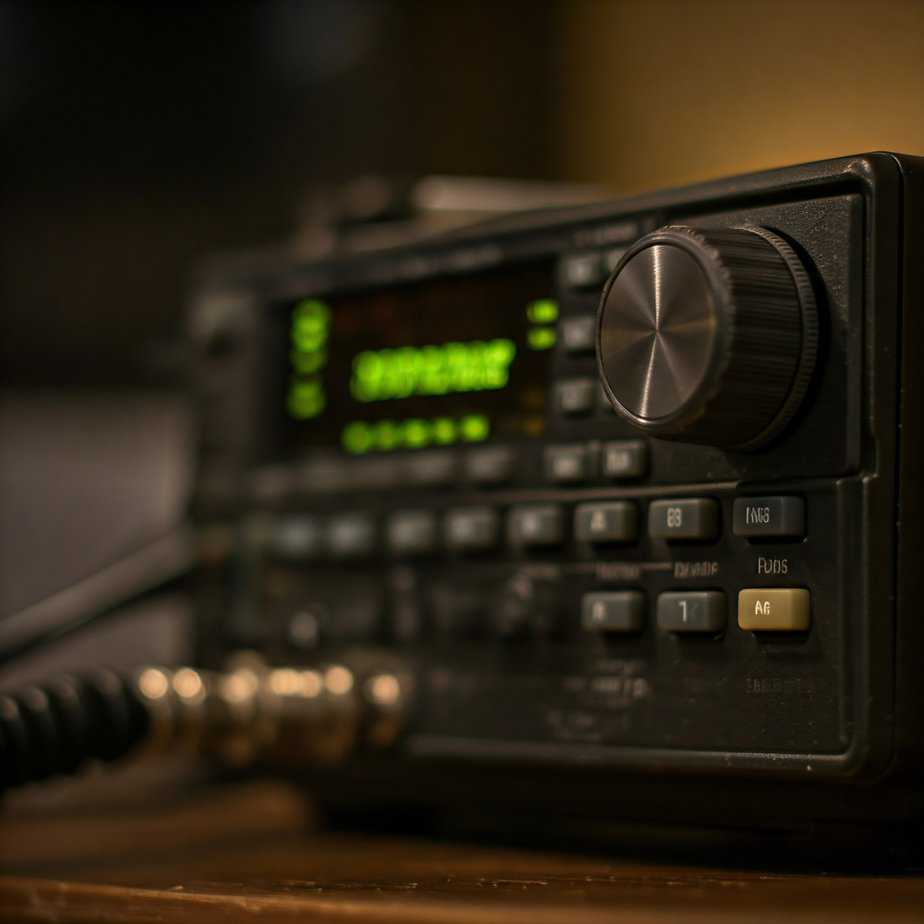
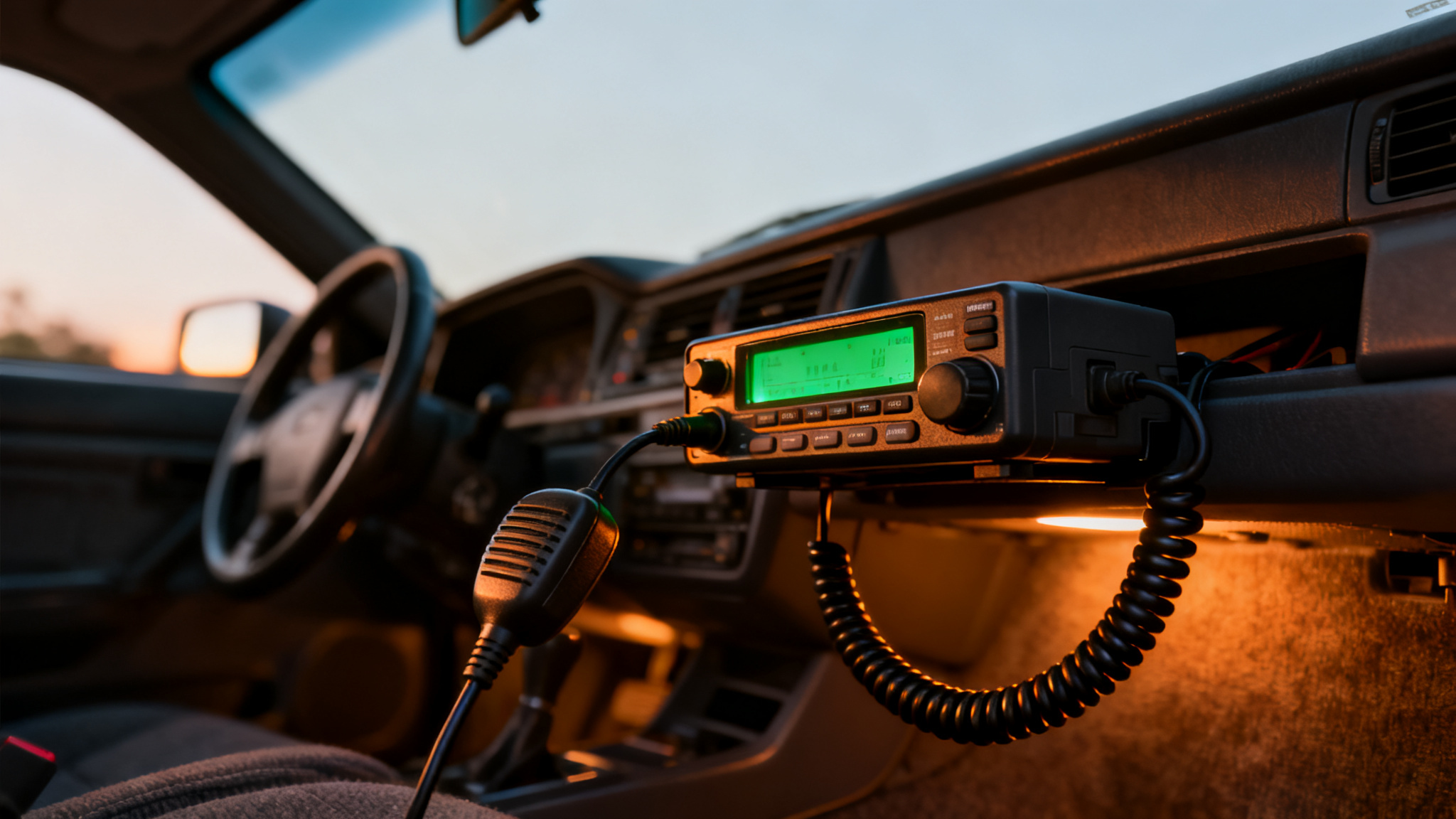
A mobile radio is a larger unit designed to be mounted in your car or on your desk at home. It runs off a power supply rather than batteries, which means it can put out more power and generally has better range than an HT.
You don’t need one as your first radio — but it’s a natural step two, especially if you want a base station at home or plan to use ham radio while driving.
Good beginner mobile radios to look at later: the Yaesu FT-7900R or the ICOM IC-2730A. Both are dual-band (VHF and UHF), well-built, and popular in the community.
Should You Buy an HF Radio Right Away?
HF radios let you talk to people around the world — across oceans, to other continents, sometimes bouncing signals off the ionosphere at night. It sounds incredible, and it is.
It’s also not your first radio. Here’s why:
- HF radios start at around $600 and go up from there — a lot from there.
- Your Technician license gives you very limited HF access. You’d need your General license to really use it.
- HF requires an external antenna, which means planning, space, and sometimes dealing with your HOA (the final boss of the ham radio world).
Get comfortable on VHF/UHF first. Talk to people on repeaters. Get your General license. Then look at HF. It’s not going anywhere.
Common Mistakes New Hams Make When Buying Their First Radio
- Buying a scanner instead of a transceiver. Scanners can only receive — they can’t transmit. Double-check what you’re buying.
- Spending too much too soon. You might fall in love with the hobby, or you might try it for a month and decide it’s not for you. Start cheap and upgrade later.
- Skipping the programming cable. If you buy a Baofeng, also buy the USB programming cable and download CHIRP (free software). Programming channels manually is a special kind of frustration you don’t need.
- Buying a radio without checking local repeaters first. Make sure there are active repeaters in your area before you buy. Most cities have plenty — but if you’re in a remote area, it’s worth checking on repeaterbook.com first.
Ready to Make Your First Contact?
Getting your first radio is the fun part. The slightly less fun part is figuring out what to do next — how to program repeater frequencies, what to say when you first key up, and how not to accidentally break any rules on your first day.
We put together a free New Ham’s Quick-Start Checklist that covers all of it — from buying your first radio to making your very first contact, in plain English with no jargon. It’s free and you can grab it below.