Owning a radio isn’t the same as having a plan. A ham radio emergency communication plan is what turns a handheld in a drawer into something your family can actually rely on when the phones go quiet. In this guide, you’ll build one step by step: who to call, on what frequency, at what time, and what happens when plan A falls over.
Think of it as a fire drill for your radio. Nobody enjoys it, but everyone’s glad they did it.
Why Preppers Need a Plan, Not Just a Radio
Here’s the uncomfortable truth. In a real emergency, the radio is rarely the problem. The problem is that nobody knows which channel to tune to, the battery has been dead since last spring, and your brother-in-law has no idea what “simplex” means.
Cell networks get overloaded within minutes of a major event. Power cuts take out towers once their backup batteries run dry. Ham radio keeps working because it doesn’t need any of that. Two radios, some battery power and a bit of air between them is all it takes.
But that only helps if everyone in your group is listening in the same place at the same time. That’s what the plan is for.
Step 1: Decide Who’s in Your Network
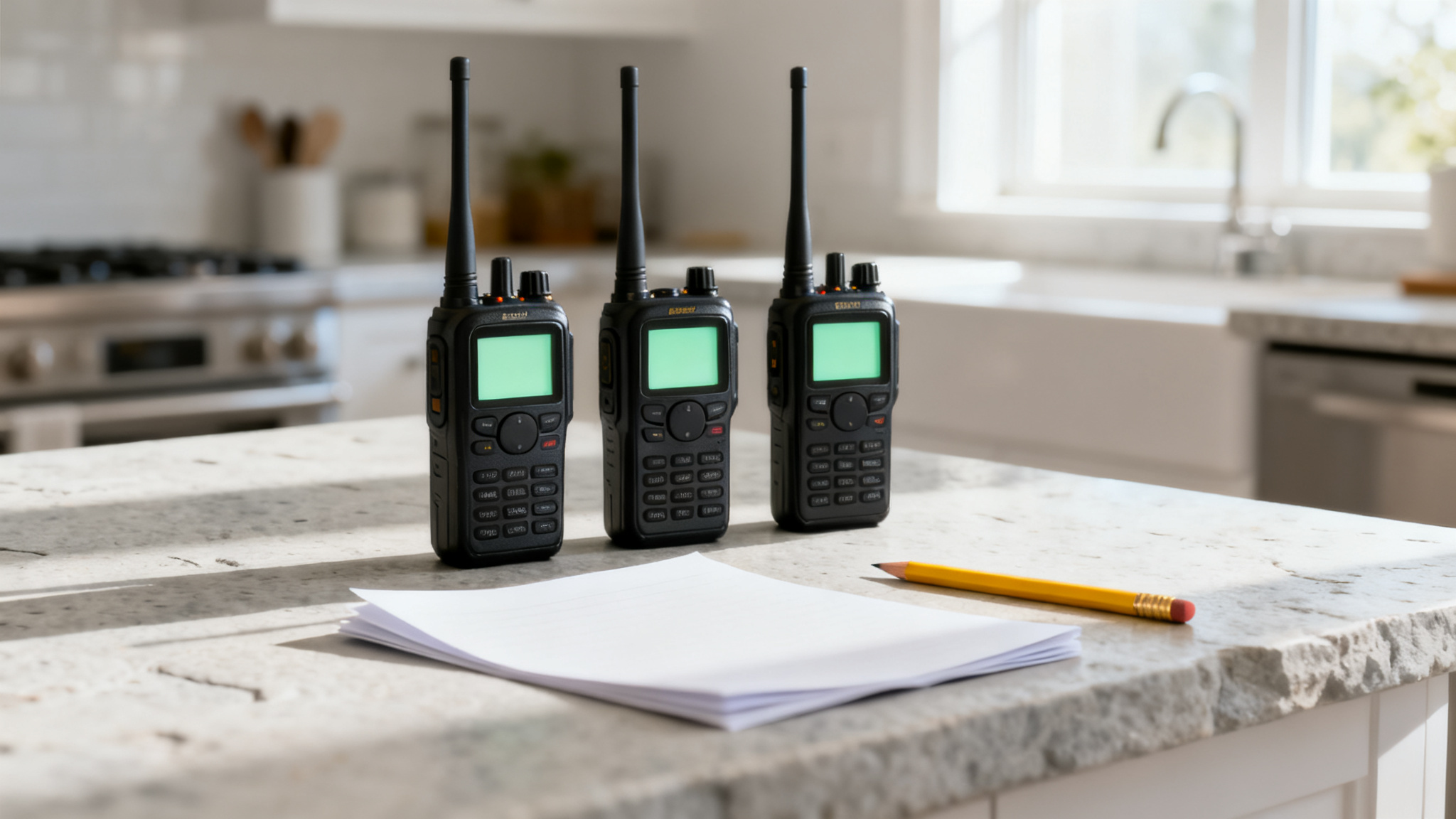
Start with a short list. Who do you need to reach if things go sideways?
- Your household – especially anyone who’s often away from home
- Nearby family or friends – the people you’d go to, or who’d come to you
- A distant contact – someone outside the affected area who can relay messages and check on news
- Local hams – your nearest club or emergency group, who’ll know what’s happening on the ground
Write down each person’s name, callsign (if they have one), and their home location. Keep it on paper. A list saved on your phone is a lot less useful when your phone is a very expensive paperweight.
Step 2: Use the PACE Method for Backup Options
The military uses a simple idea called PACE: Primary, Alternate, Contingency, Emergency. It just means you have four ways to communicate, ranked from most to least convenient. If one fails, everyone already knows what to try next.
A typical prepper’s PACE plan might look like this:
- Primary: Cell phone calls and texts (texts often get through when calls don’t)
- Alternate: A local 2-meter repeater your group has agreed on
- Contingency: Direct radio-to-radio contact on a set simplex frequency
- Emergency: HF radio to reach your distant contact, or a pre-agreed physical meeting point
Simplex just means talking radio to radio with no repeater in the middle. It has a shorter range, but it doesn’t depend on anyone else’s equipment staying powered up. Repeaters are brilliant until the generator at the top of the hill runs out of fuel. If repeaters are new to you, our guide on what a ham radio repeater is and how to use one covers the basics.
Step 3: Pick Your Frequencies (and Write Them Down)
Agree on specific frequencies in advance. “We’ll find each other somehow” is not a frequency.
Good starting points in the US include:
- 146.520 MHz – the national 2-meter simplex calling frequency. Lots of hams monitor it.
- 446.000 MHz – the 70-centimeter simplex calling frequency
- Your chosen local repeater – include the offset and tone so anyone can program it
- NOAA Weather Radio (162.400 to 162.550 MHz) – receive only, but great for news and warnings
Using a calling frequency is handy, but in a busy emergency it can get crowded. Pick a quieter “family” simplex frequency as well, and agree to move there once you’ve made contact. For a fuller list, see our guide to ham radio frequencies for preppers.
Program every radio in your group with the same channels in the same order. Channel 1 should mean the same thing on everyone’s handheld. That way, “go to channel 3” works even when people are stressed and fumbling with buttons.
Step 4: Set a Check-In Schedule
Radios eat batteries when they’re left on all day. So instead of listening constantly, agree on set times to check in.
A simple schedule might be: listen for 10 minutes at the top of every even hour (8am, 10am, noon and so on). If you can’t reach someone, try again at the next window, then move to the next step of your PACE plan.
Keep messages short and useful. Who you are, where you are, whether you’re okay, and what you need. Save the long stories for when the power comes back on.
Step 5: Sort Out Power Before You Need It
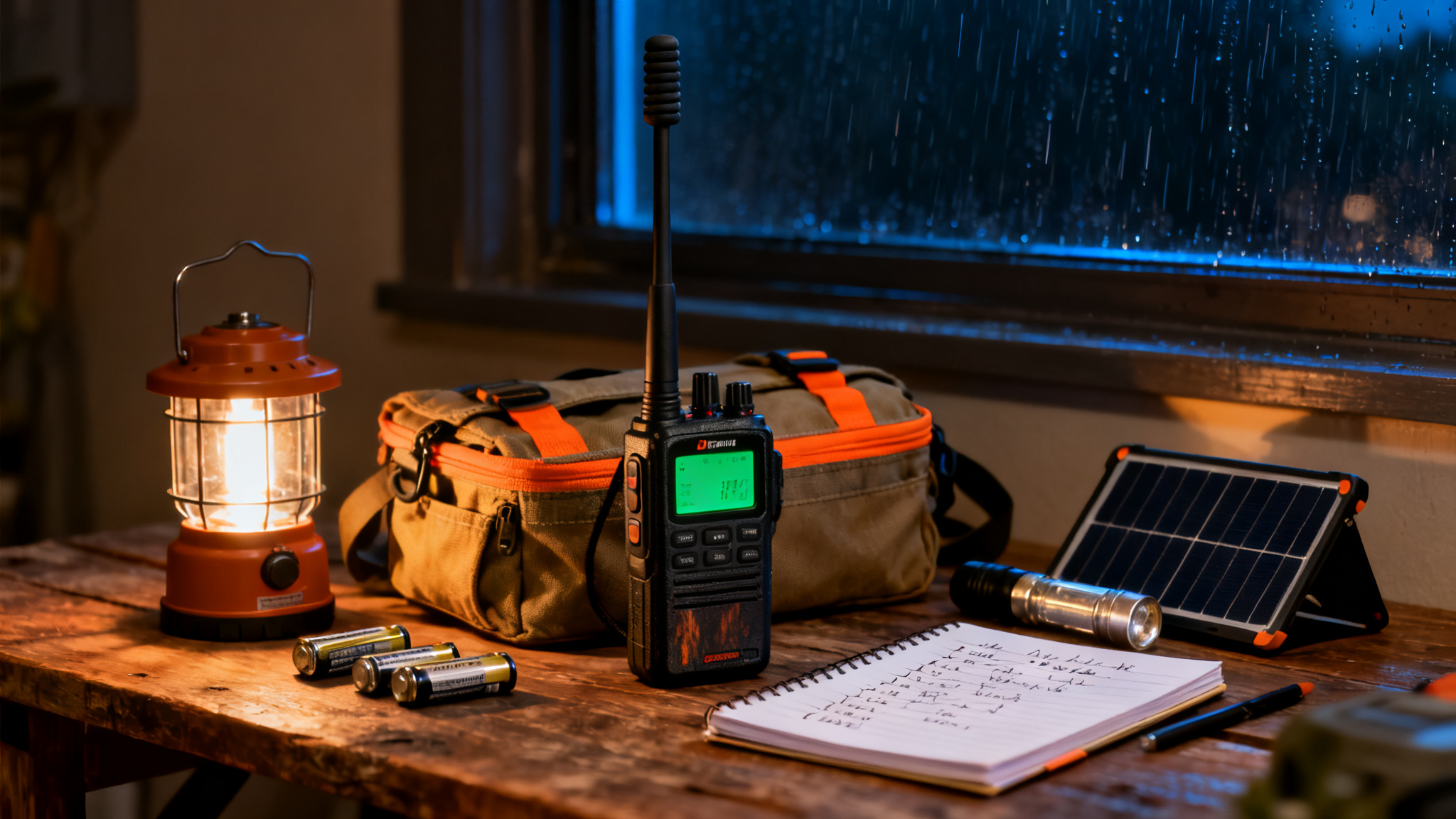
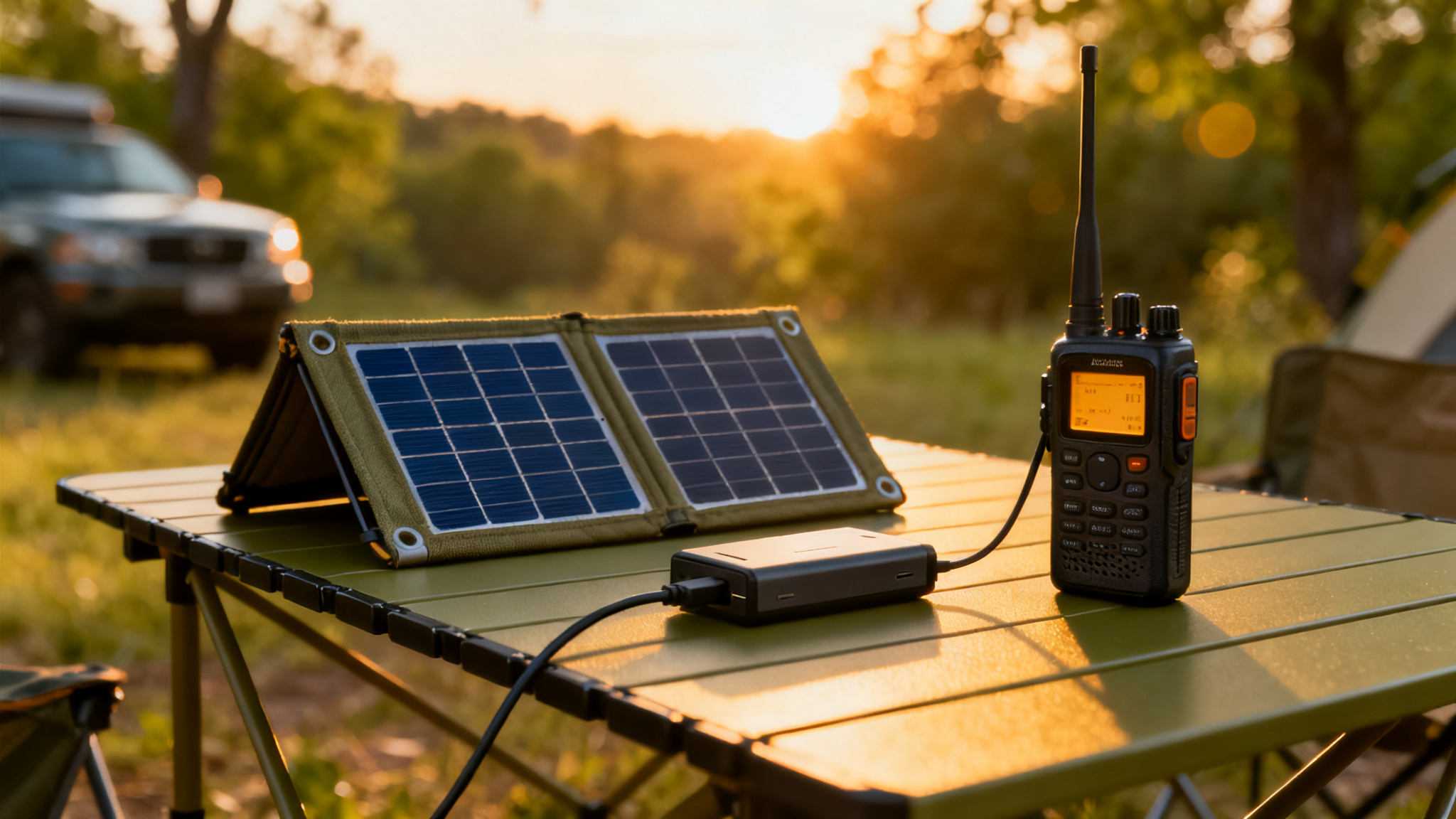
A radio without power is a paperweight with an antenna. Your emergency plan needs to cover:
- Spare batteries for every handheld, kept charged
- An AA battery pack if your radio supports one, since AAs are easy to find
- A small solar panel or power bank to top things up
- A 12-volt option so you can run a radio from a car if you have to
Put a reminder in your calendar to charge everything once a month. Batteries slowly lose their charge sitting in a drawer, and they always seem to pick the worst possible moment to let you know.
If you’re still choosing gear, our roundup of the best handheld ham radios for preppers is a good place to start.
Step 6: Practice, Practice, Practice
This is the step most people skip, and it’s the one that matters most. A plan you’ve never tested is really just a hopeful document.
Run a drill every month or two. Turn off your phones for an evening and try reaching each other using only radios. You’ll quickly find the gaps: the radio that wasn’t programmed, the dead spot behind the hill, the cousin who’s been transmitting with the volume turned all the way down.
Better still, join a local net. A net is a scheduled on-air meeting where hams check in one by one. Many areas also have an ARES group (Amateur Radio Emergency Service) that trains for exactly these situations. You’ll practice real radio procedures and meet people who know what to do when things go wrong. Our guide on how to find local ham radio clubs will help you track them down.
Getting Your Plan Started This Week
You don’t need to do all of this at once. Here’s a simple first week:
- Write your contact list on paper
- Pick one repeater and one simplex frequency
- Program those into every radio you own
- Do one test call with someone in your network
One more thing: transmitting on ham bands requires a license. Getting your Technician license is easier than most people think, and it means you can practice legally before you ever need to rely on it. If you want the bigger picture on why radio matters for preparedness, our main guide on ham radio for preppers covers it in depth.
Ready to Get Your Emergency Radio Plan in Place?
The best emergency plan is the one you’ve already tested on a quiet Tuesday evening. Start small, get licensed, and build from there.
We put together a free Ham Radio Quick-Start Checklist that walks you through exactly what to buy, how to get licensed, and how to make your first contact without the guesswork. Grab your free checklist here and take the first step toward being the person everyone’s glad to know when the lights go out.