
You’ve probably heard wild claims about ham radio. “I talked to someone in Japan!” “I can only reach the next town over.” Both can be true on the same radio, on the same day. So how far can a ham radio actually reach? The honest answer is: it depends, and in this guide you’ll learn exactly what it depends on.
Let’s clear up the mystery without the textbook jargon.
The Short, Honest Answer
A ham radio can reach anywhere from a few blocks to the other side of the planet. That’s not a dodge – it’s just how radio works. The range depends mostly on three things: the frequency band you’re using, your antenna, and a little bit of luck with the atmosphere.
A cheap handheld radio talking directly to a friend? Think a few miles. That same hobby, using a different band and a decent antenna at night? You could be chatting with someone thousands of miles away. Same license, same operator, wildly different results.
Handheld Radios: A Few Miles (Usually)
Most beginners start with a handheld radio – the little walkie-talkie-looking thing. These run on VHF and UHF frequencies, which travel in pretty much straight lines. Radio folks call this “line of sight.”
Here’s the catch: the Earth is round, and buildings and hills get in the way. So on flat ground, a handheld might reach 1 to 5 miles. Standing on top of a mountain with a clear view? You could stretch that to 50 miles or more. The trick is height. The higher your antenna, the farther your signal sees.
A quick rule of thumb: getting your antenna up high beats cranking up the power almost every time. Five watts from a hilltop will out-perform fifty watts from the bottom of a valley.
Repeaters: Borrowing Someone Else’s Tall Antenna
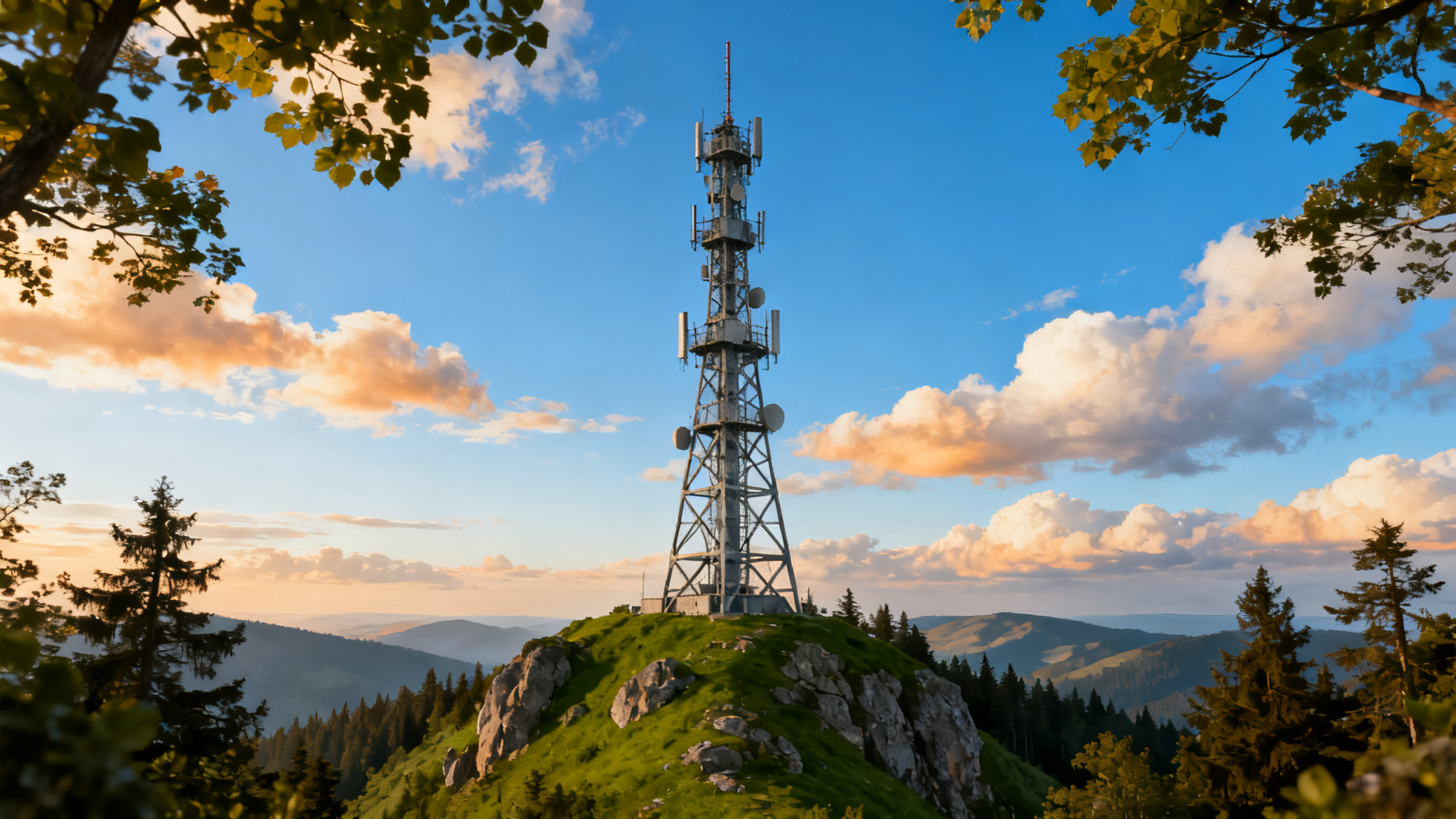
This is where new hams have their first “whoa” moment. A repeater is a radio station, usually parked on a tall tower or mountaintop, that listens to your signal and instantly re-broadcasts it with way more power and height.
So instead of your little handheld trying to reach across the whole city, it just needs to reach the repeater. The repeater does the heavy lifting. Suddenly your 5-watt handheld covers an entire metro area – 30, 40, even 60 miles. Link a few repeaters together and you can talk across a whole region.
Repeaters are free to use, scattered all over the country, and they’re the reason your modest handheld feels a lot more powerful than its size suggests.
HF Radio: This Is Where It Gets Wild
Now for the magic trick that makes ham radio famous. HF – high frequency – is a set of lower bands that behave completely differently from your handheld.
Instead of traveling in straight lines, HF signals shoot up into the sky and bounce off a layer of the atmosphere called the ionosphere. The signal skips back down to Earth hundreds or thousands of miles away, then can bounce again. Hams call this “skip,” and it’s how someone in Texas ends up chatting with someone in Italy on a setup that fits on a desk.
With HF, “how far” stops being the interesting question. The whole world is on the table. The real question becomes when – because timing matters more than you’d think.
Why the Same Radio Reaches Different Distances
Ever wonder why an HF operator can reach Europe at night but barely leaves the state at noon? Blame (or thank) the sun.
The ionosphere changes constantly. Daytime, nighttime, the seasons, and even an 11-year solar cycle all change how well signals bounce. Some bands open up at night and go quiet during the day. Others do the opposite. Part of the fun of HF is learning these rhythms – it’s a bit like fishing. You learn when and where the good conditions show up.
Here’s what actually moves the needle on your range:
- Frequency band – VHF/UHF for local, HF for long distance
- Antenna – height and quality matter more than almost anything else
- Power – helps, but less than people assume
- Terrain – hills and buildings block; high ground helps
- Atmospheric conditions – time of day, season, and solar activity
Notice that fancy expensive gear isn’t on that list. A modest radio with a well-placed antenna will beat a pricey radio with a bad one every single time.
So What Can You Realistically Expect?
Let’s put real numbers on it so you know what you’re getting into:
- Handheld, direct: 1-5 miles in town, much more from high ground
- Handheld through a repeater: 30-60 miles, often a whole metro area
- Mobile or base station on VHF/UHF: a bit farther, thanks to better antennas
- HF base station: regional, national, or worldwide depending on the band and conditions
If your goal is chatting around town and being useful in an emergency, a handheld and a repeater have you covered. If you dream of talking to strangers in far-off countries from your spare room, HF is calling your name.
Getting Started Without Overthinking It
Here’s the honest truth most beginners need to hear: don’t get paralyzed by the “how far” question. Almost everyone starts with an inexpensive handheld, finds a local repeater, and makes their first contact within a day or two. That first conversation hooks you. The long-distance stuff comes later, once you’ve got your feet wet and maybe upgraded your license.
Start small. Get on the air. Range grows naturally as you learn the hobby – and you’ll be amazed how quickly a “few miles” turns into “the whole world.”
Ready to Make Your First Contact?
Knowing how far your radio can reach is one thing – actually getting on the air is another. The good news is the first steps are simpler than most beginners expect, and you don’t need expensive gear to start.
We put together a free Ham Radio Quick-Start Checklist that walks you through exactly what to buy, how to find your local repeaters, and how to make that first nerve-wracking-but-exciting contact. Grab your free checklist here and you’ll be on the air before you know it.