If you’ve ever wondered how two hams chat across a whole city using little handheld radios you could clip on your belt, the answer is almost always one thing: a repeater. Once you understand them, the hobby suddenly feels a lot bigger.
Think of a repeater as a friend on top of a mountain who shouts everything you say so the next town over can hear it. Friendly, tireless, never asks for snacks.
What Is a Ham Radio Repeater?
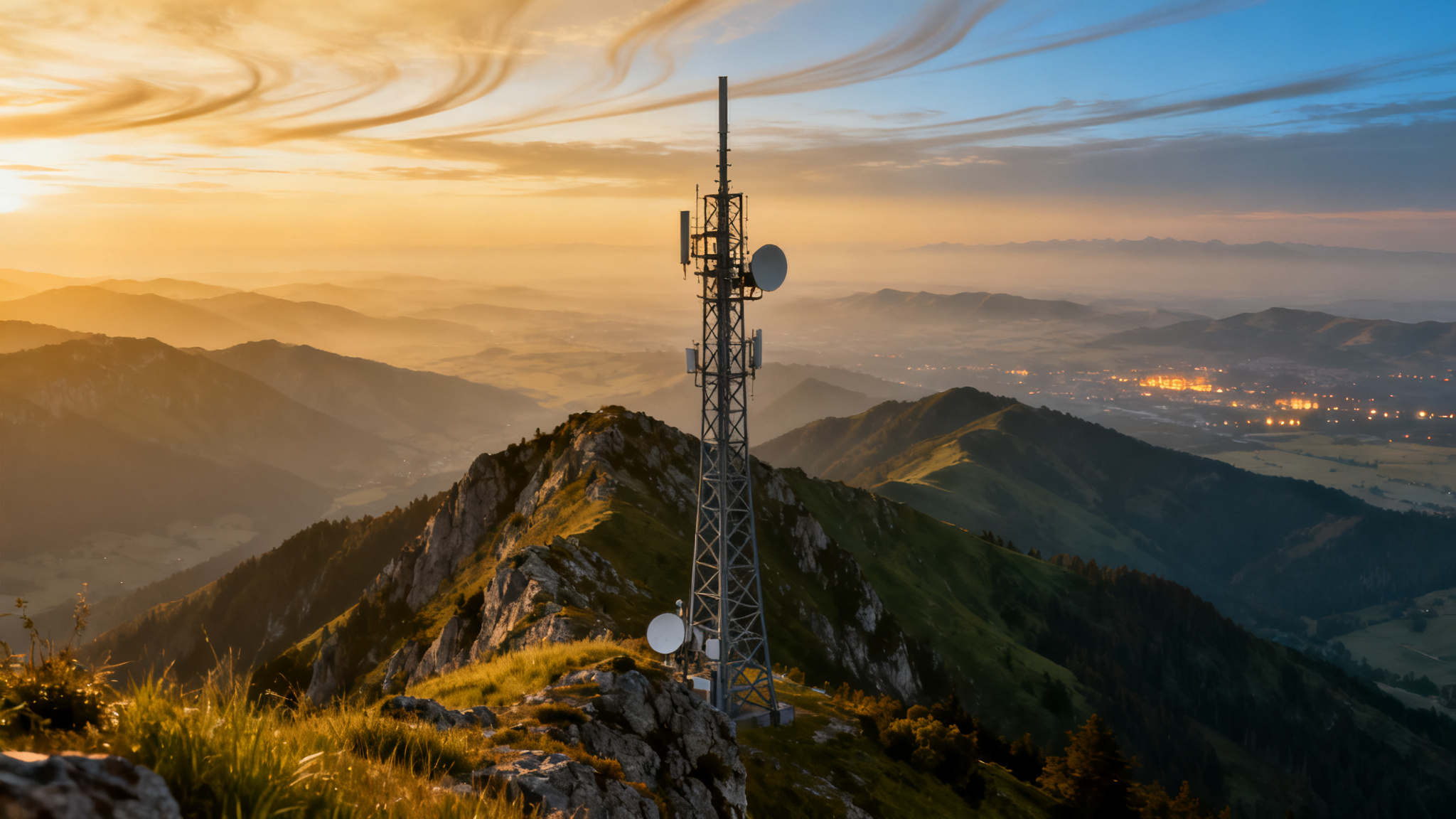
A ham radio repeater is an automated relay station, usually mounted high up – on a hilltop, a tower, or a tall building. It listens for your signal on one frequency, then instantly retransmits it on another frequency at much higher power and from a much better location.
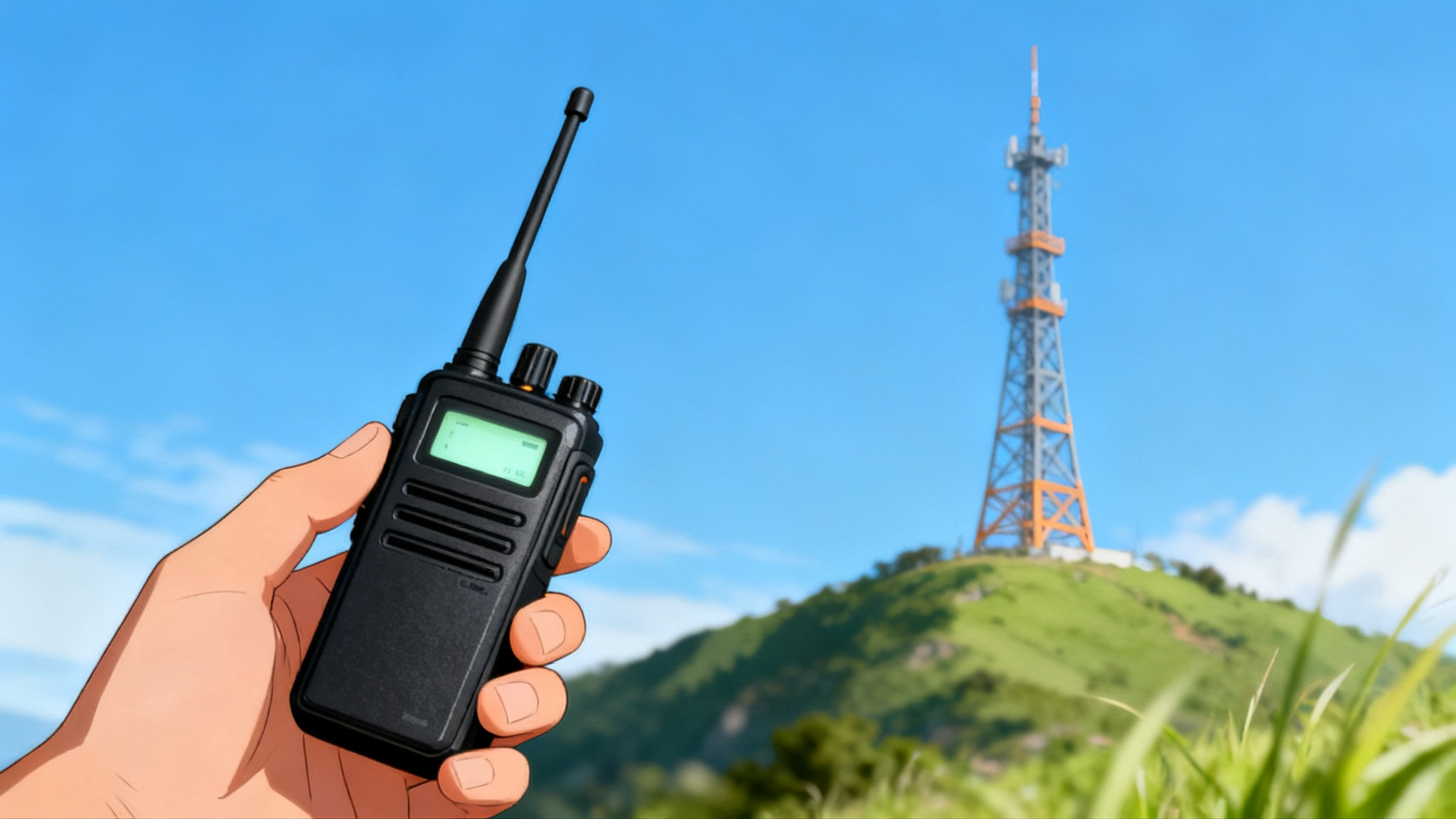
That’s the whole magic. Your little 5-watt handheld can’t punch through hills, buildings, and 30 kilometres of suburbia on its own. But a 50-watt repeater sitting 600 metres above the city can. You talk to the repeater, the repeater talks to everyone else.
Most amateur repeaters live on the VHF (2-metre, around 144-148 MHz) and UHF (70-centimetre, around 430-440 MHz) bands. These bands are great for line-of-sight communication, which is exactly why putting the relay station way up high works so well.
Simplex vs Duplex (Or: Why Repeaters Use Two Frequencies)
When you and a friend talk radio-to-radio on the same frequency, that’s called simplex. Simple, direct, no middleman. Great if you’re close. Not so great if there’s a mountain between you.
Repeaters work in duplex mode. They listen on one frequency (the input) and transmit on another (the output). You hear the output, your radio transmits on the input. The repeater handles the swap automatically.
The gap between those two frequencies is called the offset. On 2 metres in most parts of the world the offset is 600 kHz. On 70 centimetres it’s usually 5 MHz. Your radio handles all the math – you just tell it which repeater you want and it sorts the rest.
What Is a CTCSS Tone and Why Should You Care?
Most repeaters won’t open up for just anyone whistling on the input frequency. They want a little secret handshake first. That handshake is called a CTCSS tone – sometimes called a PL tone, a sub-audible tone, or just “the tone.”
It’s a quiet low-frequency tone your radio sends along with your voice. The repeater listens for the right tone before it kicks on. No tone, no relay. This stops random noise, distant signals, and that one neighbour’s electric fence from triggering it constantly.
Every repeater publishes its tone in the directory listing. You program it once, then forget about it.
How to Actually Use a Repeater (Step by Step)
Right. Enough theory. Here’s how you actually get on the air:
- Find a local repeater. Use a directory like RepeaterBook, your country’s national ham radio body, or just ask at your local club. Note the output frequency, the offset direction (+ or -), and the CTCSS tone.
- Program it into your radio. Set the receive frequency to the output. Set the offset. Set the tone. Save it to a memory channel and give it a nickname you’ll remember.
- Listen first. Always. Tune in for a few minutes before you key up. Make sure you’re not interrupting a conversation, an emergency net, or a club meeting.
- Identify and call. A simple “This is [your callsign], listening” or “[your callsign], monitoring” is enough to let people know you’re around. Someone usually says hello back.
- Wait between transmissions. Pause a beat after the repeater drops, so anyone with a quick emergency or check-in can get a word in. Most repeaters have a courtesy beep that tells you it’s safe to talk.
Repeater Etiquette – The Unwritten Rules
Repeaters are shared resources. The folks who pay to keep them running let you use them for free, so a little politeness goes a long way.
- Identify with your callsign every 10 minutes during a conversation, and at the end. Yes, it’s a legal requirement in most countries. It’s also just good manners.
- Don’t ragchew during drive-time if commuters are checking in. Wrap it up or move to a quieter repeater or simplex.
- Keep transmissions short. Repeaters often have a timeout timer – go on too long and they’ll cut you off mid-sentence. Embarrassing.
- No music, no swearing, no business. Amateur radio rules forbid all three. Keep it clean and personal.
- Say thanks. If a repeater club has a membership, join it. It’s usually the price of a coffee a month and it keeps the lights on.
Finding Repeaters Wherever You Go
One of the best things about repeaters – they’re everywhere. Travel to a new city and you can often hit a friendly local within minutes of arriving. Just program in a couple of repeaters before you leave home and you’ve got a built-in welcoming committee.
Apps like RepeaterBook (free on phones) show every published repeater near your current location. Tap one, see the frequency, offset, tone, and who runs it. Many are part of linked networks – hit one repeater and your voice goes out through a whole chain of them across the region. Wild stuff.
Ready to Make Your First Repeater Contact?
Repeaters are honestly the friendliest place to start in ham radio. The same handful of people show up every day, they love welcoming new voices, and you don’t need fancy gear – a basic handheld radio you can buy for under R1,500 will get you on the air tonight.
Want a simple plan to go from licence in hand to first repeater contact without the overwhelm? Grab the free Ham Radio Quick-Start Checklist below. It walks you through your first radio, your first programming session, your first call – all in plain English.