You’ve got your licence, your radio is programmed, and the only thing standing between you and your first conversation is a wave of nerves. That’s completely normal. Almost every ham froze the first time they keyed up.
This guide walks you through how to make your first ham radio contact, step by step, including exactly what to say so you never have to guess.
What You Need Before Your First Contact
You don’t need a fancy setup. To get on the air you need three things:
- A licence. In most countries you must be licensed before you transmit. Listening is fine without one, but talking is not.
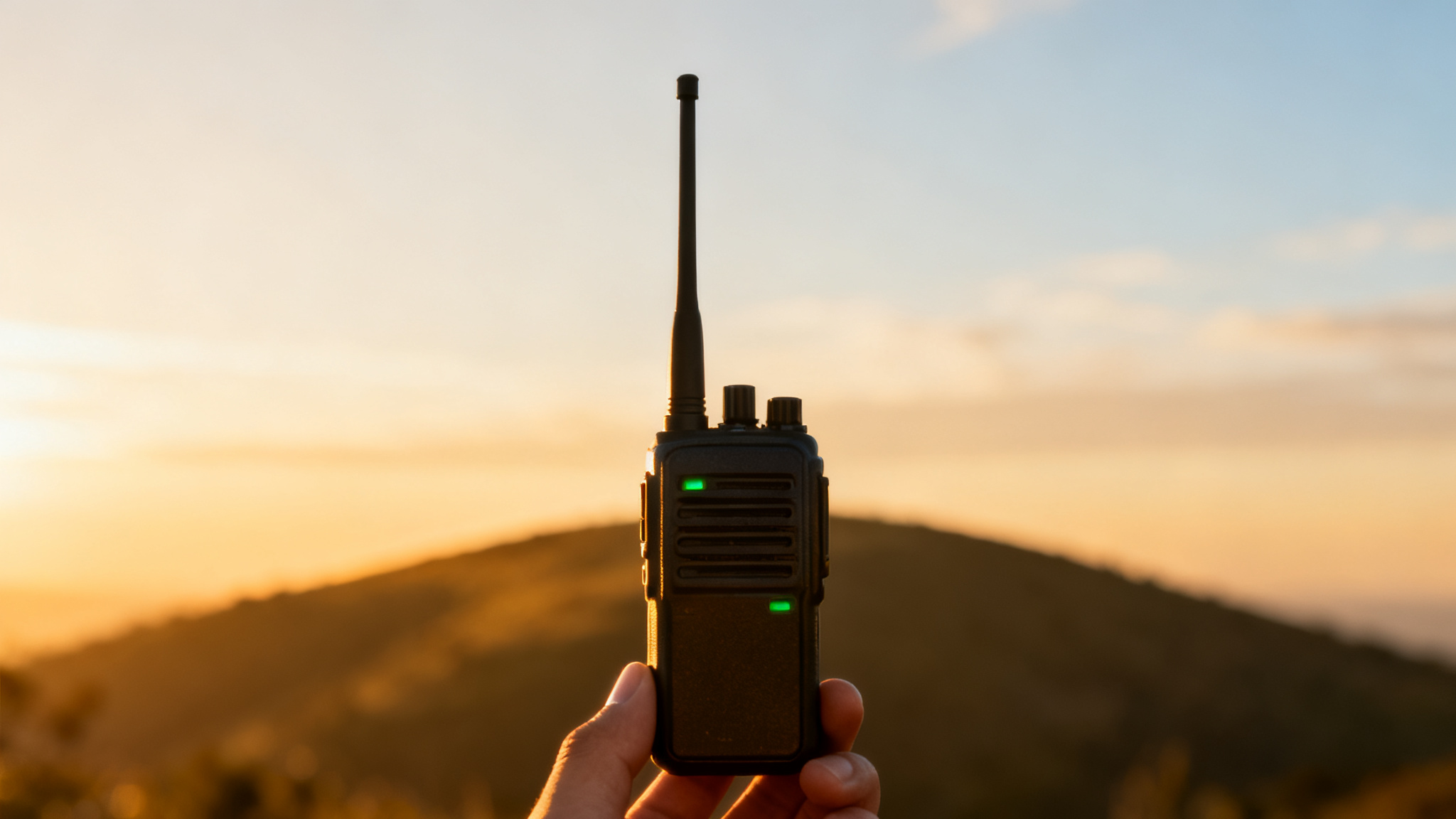
- A working radio. For most new hams this is a handheld VHF/UHF radio (often called an HT, short for handheld transceiver).
- Somewhere to make contact. For your very first contact, that’s almost always a local repeater.
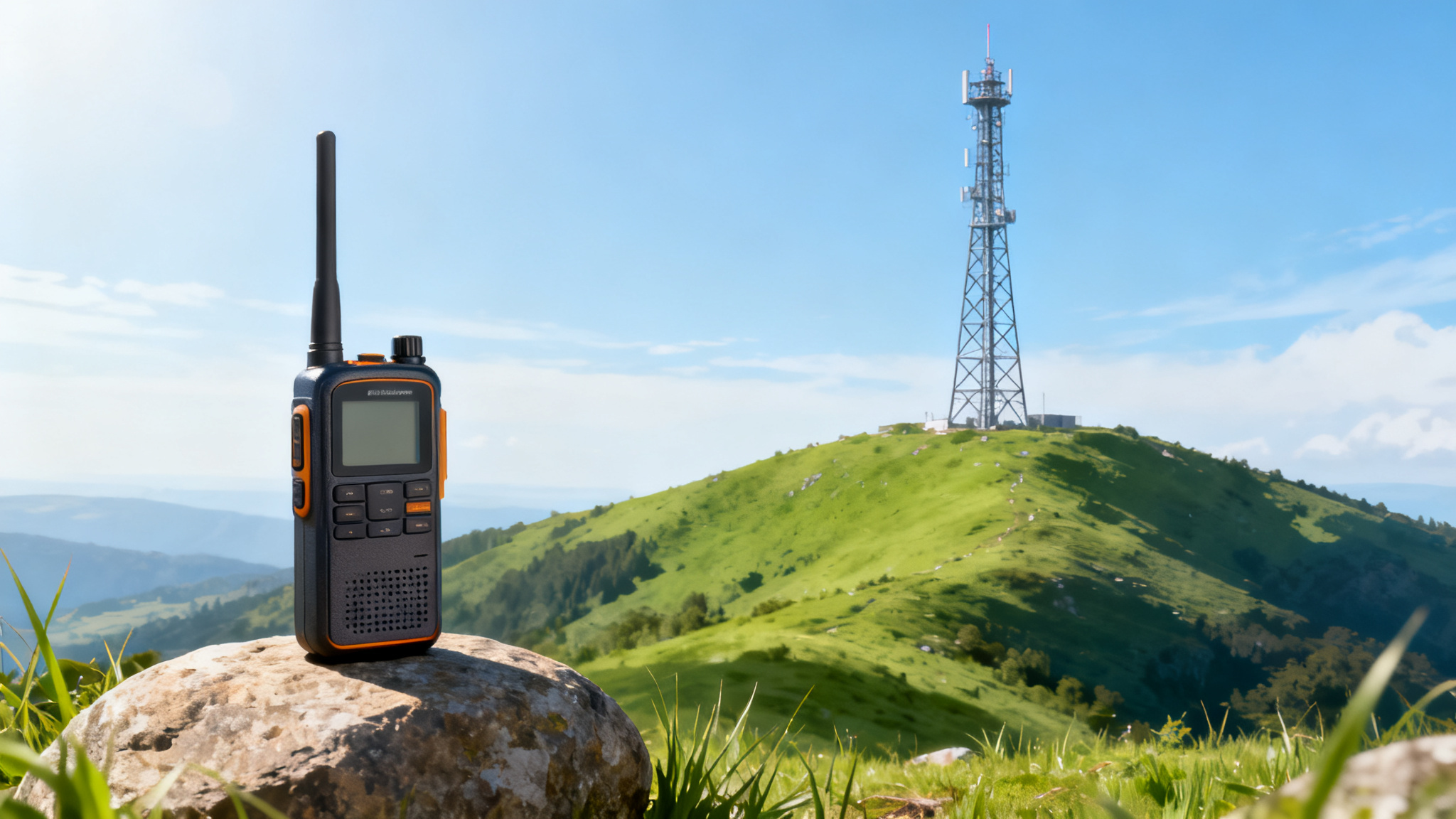
A repeater is a station, usually on a hill or tall building, that listens on one frequency and rebroadcasts on another. It hugely extends your range, so a small handheld can reach across a whole city. It’s the friendliest place to start.
The Easiest First Contact: A Local Repeater
Find a local repeater near you using a site like RepeaterBook, and program its frequency and tone into your radio. (If that sentence already lost you, learning to program your radio is step one. Plenty of beginners use software called CHIRP to make it painless.)
Once it’s programmed, do the most important thing first: listen. Spend a few sessions just monitoring. You’ll hear how people open contacts, how they hand the conversation back and forth, and how relaxed most of it actually is. Listening is never wasted time.
What to Actually Say (Step by Step)
Here’s the part everyone worries about. It’s simpler than you think.
Step 1: Make sure the repeater is free. Listen for 15 to 30 seconds. If nobody’s talking, you’re good to go.
Step 2: Announce yourself. Key up and say your callsign clearly, then say you’re listening. Something like:
“This is KE8XYZ, listening.”
That’s an open invitation. Anyone monitoring can come back to you. Use the phonetic alphabet for your callsign if conditions are noisy (“Kilo Echo Eight X-ray Yankee”).
Step 3: When someone answers, they’ll give their callsign. Reply with theirs, then yours, then say hello. For example:
“W1ABC, this is KE8XYZ. Good afternoon, thanks for coming back. My name is Sam and I’m in Cape Town. This is my first contact.”
Mentioning it’s your first contact is a great move. Hams love helping new operators, and you’ll almost always get a warm, patient response.
Step 4: Keep it simple. Exchange names, locations, and what radio you’re using. That’s a complete, perfectly normal first contact. You don’t need to fill silence or sound clever. Short and friendly wins.
Step 5: Sign off cleanly. When you’re done, say something like “Thanks for the contact, 73, this is KE8XYZ clear.” (“73” is ham shorthand for best wishes.)
Calling CQ on HF
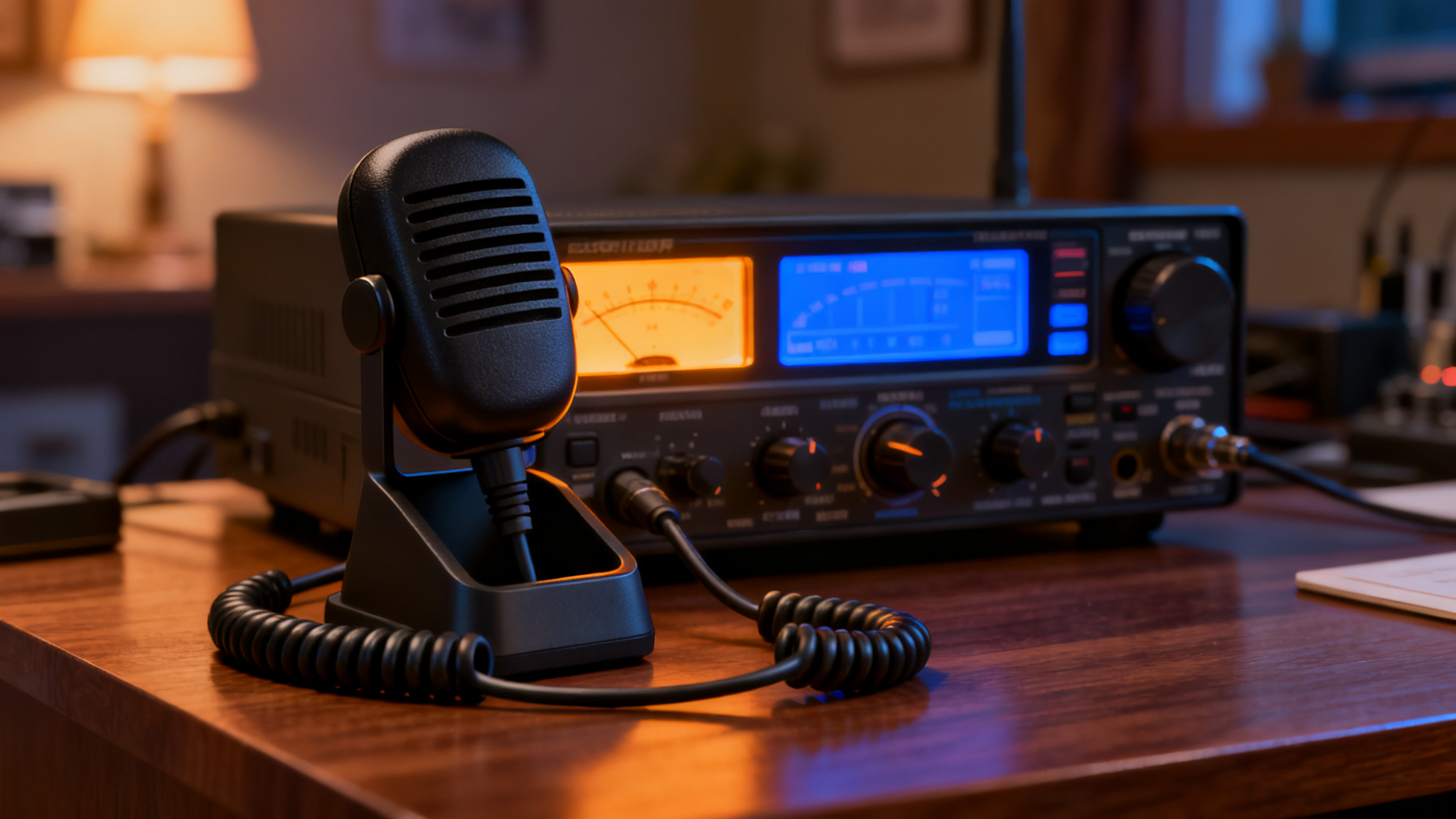
Once you’re comfortable on repeaters and maybe you’ve upgraded your licence, you’ll want to try HF, the bands that bounce signals around the world. There you make contacts by calling CQ, which simply means “anyone, come talk to me.”
It sounds like this: “CQ CQ CQ, this is KE8XYZ, KE8XYZ, calling CQ and standing by.” Then you listen. If someone answers, you run through the same friendly basics: signal report, name, location. The format barely changes; only the distances do.
Common First-Contact Mistakes
- Talking before listening. Always check the frequency is clear first. Doubling on top of someone is the most common rookie slip.
- Forgetting your callsign. You must identify with your callsign. When in doubt, say it more often, not less.
- Keying up before you talk. Press the transmit button, pause half a second, then speak. Otherwise your first word gets clipped.
- Overthinking it. Nobody expects a polished broadcast. They expect a person saying hello.
Getting Past Mic Fright
Mic fright is real and almost universal. The cure isn’t confidence, it’s reps. Your first contact will feel huge. Your tenth will feel like nothing. The fastest way through the nerves is simply to make that first call and let the other operator carry some of the load. They’ve all been exactly where you are.
Pick a quiet time of day, take a breath, and key up. Thirty seconds later you’ll be a ham who’s actually been on the air, and that feeling doesn’t get old.
Ready to Make That First Call?
Your first contact is a milestone, but it’s one step in a bigger journey: getting licensed, choosing the right radio, setting up your station, and getting confidently on the air.
Our free New Ham’s Quick-Start Checklist lays out that whole path in plain English, one simple step at a time, so nothing trips you up. Grab the free checklist on Ham Radio Planet and work through it at your own pace.