
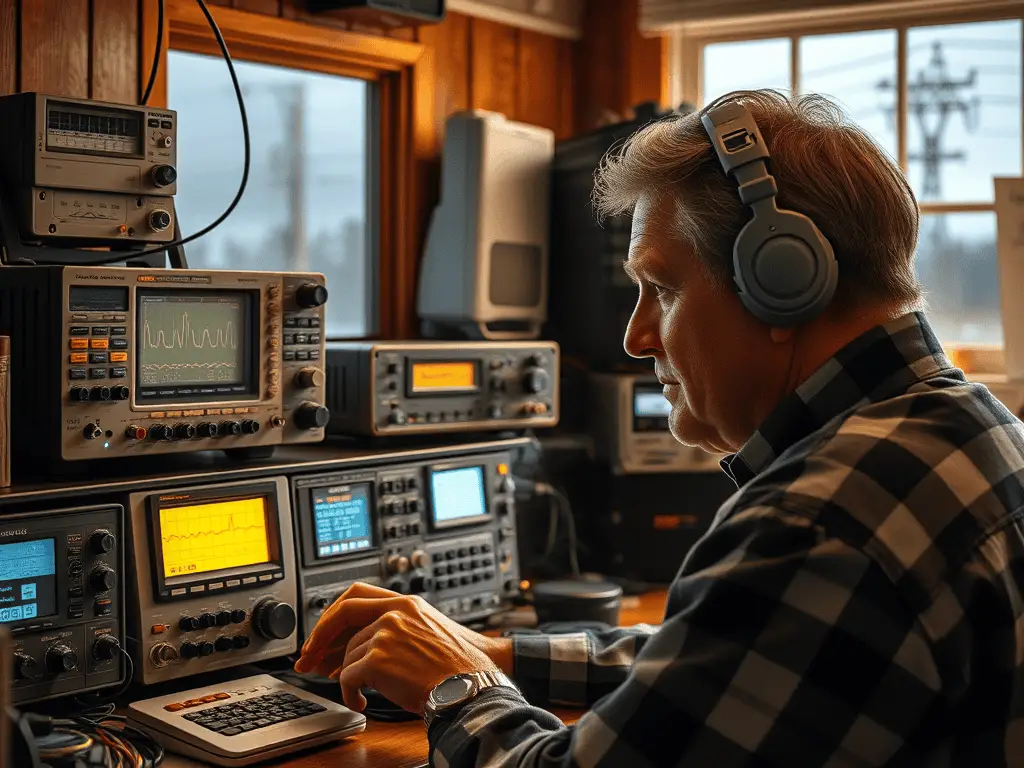
Power line noise is a headache for ham radio operators. That harsh, buzzing sound can block important signals and make chatting a real struggle.
The most practical way to get rid of power line noise? Find where it’s coming from, filter it out at your station, and report the issue to your utility company so they can fix it.
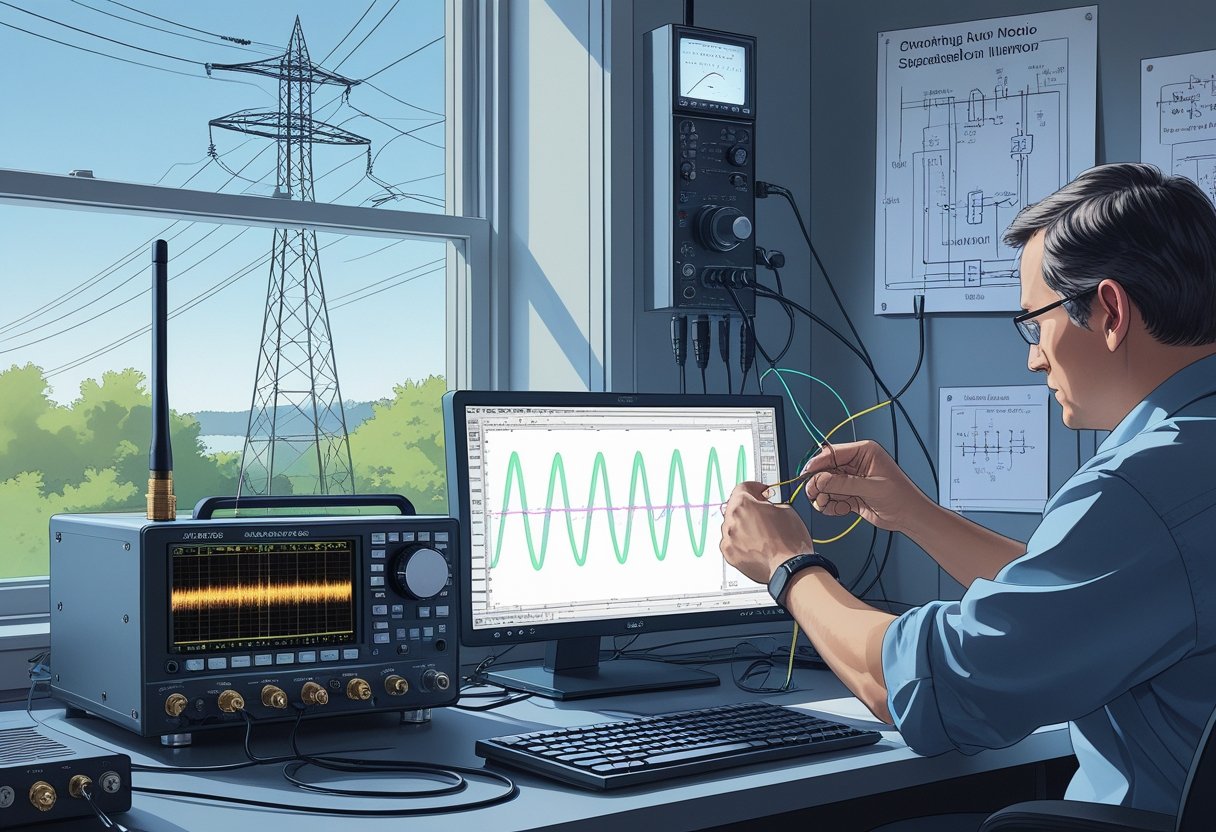
You usually have to compare signal quality with the power on and off nearby, or use tools to track down the exact spot causing trouble. Once you find it, slap on some noise filters or choke coils at the antenna to cut down the racket at your end.
But honestly, fixing the real problem almost always means the power company has to step in. Most noise comes from arcing or bad connections up on the lines.
Key Takeaways
- You need to find and filter power line noise to keep ham radio interference down.
- Working with your utility company is crucial for fixing noise at the source.
- Managing noise well makes signals clearer and keeps conversations reliable.
Understanding Power Line Noise in Ham Radio
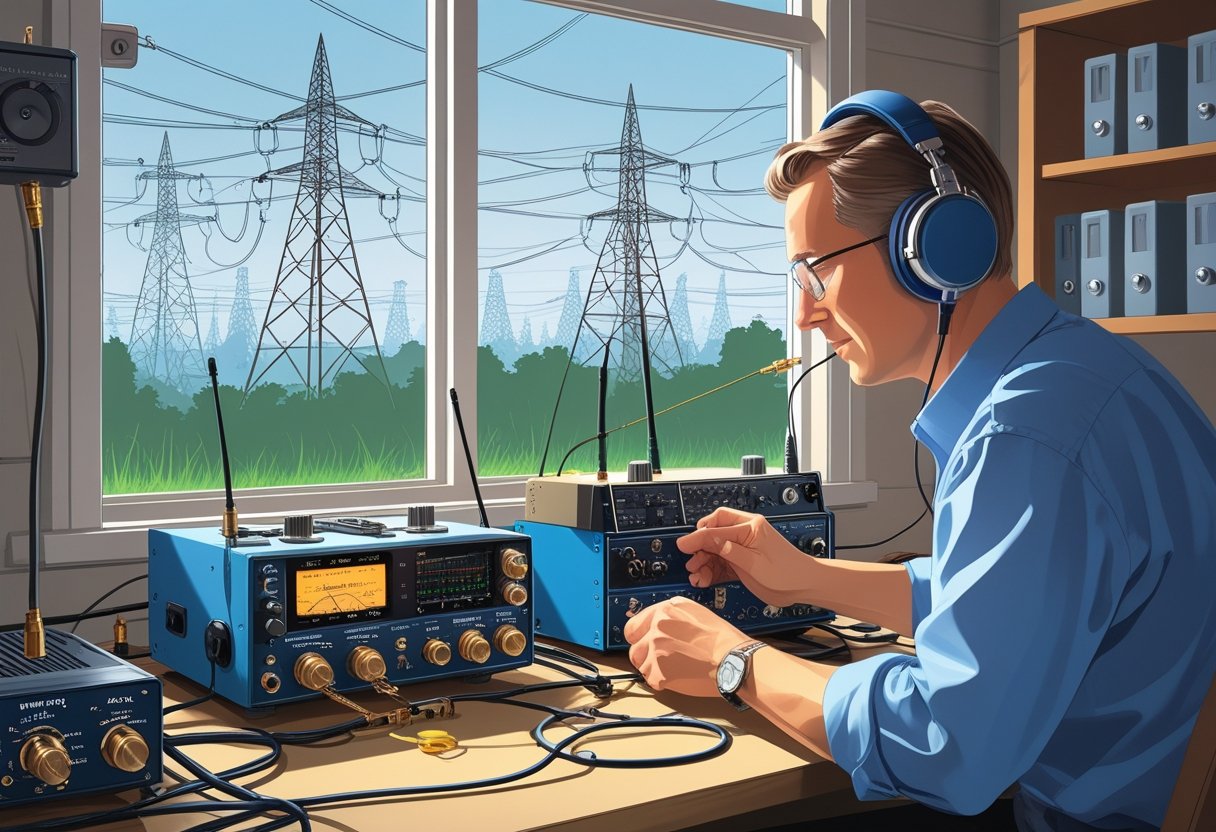
Power line noise usually sounds like a buzzing or crackling that messes with your signals. It’s often caused by electrical arcs on power lines, which really mess up transmission clarity.
If you know what causes it and what it sounds like, it’s a lot easier to hunt down and reduce the interference.
Causes of Power-Line Interference
Power-line interference pops up when electricity arcs between metal parts on power poles or wires. That arcing is basically a spark transmitter, throwing out radio waves that disrupt your ham radio.
Loose connections, broken insulators, or old hardware are usually to blame. These faults spit out bursts of noise at 120 times per second, right in sync with the 60 Hz AC power cycle.
The bigger and more frequent the arc, the louder the noise. Since power lines stretch for miles and run at high voltage, they’re prime suspects for spreading unwanted radio frequency energy.
Digital Ham Radio Toolkit – Beginner Friendly Guide
Introducing the Digital Ham Radio Toolkit – your all-in-one digital companion designed specifically for new Ham Radio operators like you! We’ve packed this essential resource with everything you need to confidently navigate the airwaves, understand the fundamentals, and get on the air faster.
Types of Radio Frequency Interference Affecting Receivers
Radio frequency interference (RFI) can come from power lines or all sorts of electrical gadgets. Power-line noise is that steady, repetitive stuff caused by electrical arcing.
Other interference types include:
- Broadband noise: Covers lots of frequencies, usually from motors or lightning.
- Narrowband interference: Hits specific frequencies, often from things like switching power supplies.
- Pulse noise: Short, sharp spikes from switching actions in electrical gear.
Power-line noise stands out because it’s a steady buzz or crackle at regular intervals. That makes it easier to tell apart from random static or other noise.
Identifying Common Noise Patterns
Power-line noise often creates a ripple or buzzing that repeats about every 8.33 milliseconds. That matches the two interruptions per cycle in 60 Hz AC power.
If you use AM mode on your receiver and tune to a quiet spot, you’ll hear those bursts loud and clear. The noise sounds raspy, sometimes louder, sometimes softer, and can ramp up with weather or at certain times of day.
If the noise comes in quick, regular bursts, it’s probably the power lines—not your toaster or some random gadget. Spotting this pattern is key to tracking down and getting rid of power-line noise. For more tracking tips, check out this guide on locating power line noise.
Detecting and Locating Power Line Noise
Detecting power line noise takes some specialized gear and a careful ear. You’ve got to use receivers, direction finders, and other tools to zero in on the unique interference. Getting the location right makes everything else easier.
Using Interference Locating Receivers
Interference locating receivers are built to pick up those pesky signals, including power line noise. They scan the spectrum and usually have filters and signal meters to help you spot where noise peaks.
People often like the Radar Engineers Model 240 because it’s sensitive and can filter specific frequencies. You can use it to isolate noise in the AM band or elsewhere. Walk around with the receiver and watch the signal strength—when it spikes, you’re getting close.
Tools for Detection: Defect Direction Finder & Broadband AM Receiver
The defect direction finder points you toward the strongest noise source. It’s handheld and works well with an interference receiver.
Broadband AM receivers are handy too, since power line noise shows up in the AM band. They let you hear a wide range of frequencies, which helps you judge the noise’s strength and location.
Use these tools together to trace the noise path. Try moving guy wires or tapping poles—if the noise changes, you’re likely onto the right spot.
Analyzing with Oscilloscope and Noise Fingerprint
An oscilloscope shows the shape and pattern of power line noise. Hook it up to your receiver output and you’ll see the waveform right away.
Each noise source has its own “fingerprint.” Recognizing those patterns is a big help in confirming what’s causing the trouble.
With the oscilloscope, you can see timing, pulse shape, and how often it repeats—details that usually match high-voltage arcs on the lines. This step is important before you call the utility or plan repairs.
Mitigating Power Line Noise for Effective Communication
Cutting down power line noise takes a few targeted moves. Try changing your antenna’s placement or design, tweaking your receiver’s RF gain, and using shielding or filters. Each trick tackles a different part of the problem and helps you keep signals clean.
Optimizing Antenna Placement and Design
Where you put your antenna matters—a lot. If you can, keep antennas far from power lines and electrical gear. The more distance, the less noise you’ll pick up from arcs and interference.
Good antenna design helps too. Directional antennas like yagis focus reception away from noise sources. Baluns and grounding improve performance and block unwanted signals. A balanced antenna is less likely to pick up RFI from power lines.
Adjusting RF Gain Control and Receivers Settings
Lowering the RF gain on your receiver can cut down noisy signals without losing the weak ones you want. It helps keep that background hum from power line noise at bay.
Picking the right receiver mode matters. AM mode is great for spotting power line noise bursts, while SSB or CW might let less noise through. Narrowing your receiver’s bandwidth with filters lets you focus on what you want and block out junk. Tuning and audio filters help dodge interference, too.
Shielding and Filtering Techniques
Shield your cables and connectors to stop noise from sneaking in. Use well-shielded coax and ground everything in your station.
Noise filters on power lines or in your antenna line can take care of those 120-Hz bursts. Ferrite chokes, notch filters, and noise reduction units designed for ham radios all help. They cut noise but don’t kill your signal, which is what you want.
If you want to dig deeper, check out guides on locating power line noise and other RFI.
Digital Ham Radio Toolkit – Beginner Friendly Guide
Introducing the Digital Ham Radio Toolkit – your all-in-one digital companion designed specifically for new Ham Radio operators like you! We’ve packed this essential resource with everything you need to confidently navigate the airwaves, understand the fundamentals, and get on the air faster.
Working with External Parties to Resolve Interference
Solving power line noise isn’t just a solo job. You’ll often need help from the power company, public service agencies, or even your neighbors.
Reporting to Power Company and Electric Utility
If you spot power line noise, call your local power company or utility. They’ve got the right tools and know-how to find bad connections or faulty gear causing interference.
Give them as much detail as you can—timing, frequency, and what you’re hearing on your radio. Utilities usually send out techs with ultrasonic detectors and other gear to track down the problem.
The law often says utilities have to deal with complaints within a set time, sometimes up to 60 days. It’s usually affordable and protects both their system and your radio. Being polite and clear makes things go smoother. Check the Power Line Noise FAQ from ARRL for more info.
Filing Interference Complaints with Public Service Bodies
If the utility drags its feet, you can file a complaint with public service or regulatory agencies. These groups make sure utilities follow the rules on interference.
You’ll need to document the problem—audio recordings or detailed logs help. Some complaints fall under “TVI” (television interference) rules, but they work for radio too.
Procedures vary, so check with your local public service commission or the FCC for details. Keep at it and follow up, since these agencies work with utilities to fix stuff and enforce the law.
Collaborating with Neighbors and ARRL
Your neighbors might be dealing with the same noise. Teaming up with them helps confirm the source and gives your complaint more weight.
Joining local radio clubs or the ARRL (American Radio Relay League) gives you access to advice and resources. The ARRL can guide you on documenting interference and dealing with utilities.
A community approach often gets faster action from the power company. More complaints mean more urgency. Staying in touch with neighbors and radio groups boosts your odds for a real fix. For more strategies, see the Gwinnett Amateur Radio Society presentation.
Best Practices and Preventive Strategies for Ham Operators
Managing power line noise takes steady effort and awareness. Operators need to stay up-to-date, use official resources, and follow the rules to keep communications clear.
Ongoing Training and Education
Ham operators really benefit from ongoing learning about noise sources and how to fight them. Training programs teach you to spot power line noise and tweak your setup to minimize it.
Workshops and online courses keep you up with new tech and best practices. Local clubs and peer groups give you hands-on experience and a place to swap ideas. With regular training, you’ll feel more confident using proven methods to reduce power line noise.
Utilizing FCC and RFI Services
The Federal Communications Commission (FCC) offers tools and advice for handling radio frequency interference (RFI). Ham operators can report interference through the FCC complaint process, which can kick off investigations and enforcement if necessary.
Many communities also have RFI services that help diagnose and fix noise problems. These groups often work with power companies or equipment providers to track down issues like corona discharge or bad lines.
Using both FCC resources and local RFI programs gives operators a better shot at solving interference problems quickly.
Staying Updated on RTVI and Regulatory Guidelines
RTVI (Radio TV Interference) regulations play a big part in how power line noise gets managed. Operators really need to understand these rules to stay compliant and help cut down on interference.
Regulatory changes can sneak up on you. Subscribing to newsletters or keeping an eye on updates from amateur radio associations helps operators stay in the loop on technical standards and legal stuff.
This kind of knowledge makes it easier to keep signals clear and within the rules.
Digital Ham Radio Toolkit – Beginner Friendly Guide
Introducing the Digital Ham Radio Toolkit – your all-in-one digital companion designed specifically for new Ham Radio operators like you! We’ve packed this essential resource with everything you need to confidently navigate the airwaves, understand the fundamentals, and get on the air faster.
Frequently Asked Questions
Power line noise in ham radios usually comes from electrical faults like arcing on power lines. Finding the source and using filters or proper grounding can help cut down interference.
What are common causes of power line noise in ham radios?
Most power line noise comes from arcing between metal conductors on power poles. Stuff like faulty insulators, loose connections, or damaged wires can create sparks that throw off radio frequency interference.
Noise often shows up in bursts, about 120 times per second, thanks to the alternating current cycle in power lines. It’s kind of relentless.
How can I locate the source of power line noise affecting my ham radio operation?
Operators can try radio direction-finding techniques to track down noise sources. Listening for that harsh buzzing and tuning to empty frequencies with AM mode and a wide filter helps narrow it down.
Once you’ve got some details, contact your local power utility. That usually gets repairs moving faster. The FCC gives utilities 60 days to respond to interference reports, which feels like forever, but it’s something.
What steps can I take to mitigate power line noise interference in radios?
First, figure out if the noise is coming from inside or outside your shack. Fixing any faulty gear inside can save you some headaches.
If it’s outside, let the utility company know. Shielding, proper grounding, and tidy cabling all help cut down noise—especially indoors.
Which filters are effective for reducing power line noise in ham radio setups?
Bandpass and notch filters do a pretty good job reducing broadband noise from power lines. Audio filters that reject frequencies near 120 Hz can help too, since that’s where power line noise often hits hardest.
Mixing filters with smart wave propagation practices can really clear up your signal.
Are there any best practices for grounding to minimize power line noise in amateur radios?
Ground all your equipment properly using a low-resistance, single-point ground. Avoid ground loops—having more than one path to ground just invites trouble.
Ground rods and solid bonding keep your station’s ground system stable and help block out noisy currents. It’s not glamorous, but it works.
How do regulatory agencies like the FCC address power line noise issues for radio operators?
The FCC tells power companies to fix harmful interference, usually within 60 days after getting notified.
If you’re an amateur operator, you need to figure out where the noise is coming from and report it to the utility or a local agency.
The FCC steps in to enforce these rules and keeps licensed radio services protected.