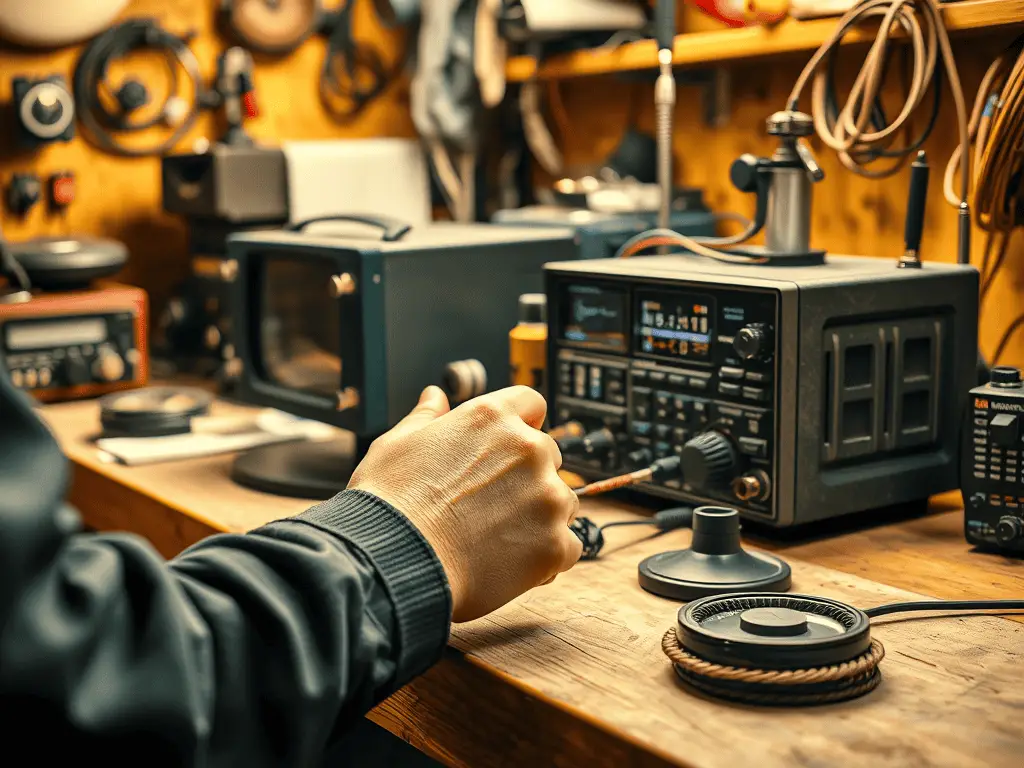
A dummy load is a vital tool for ham radio operators. It lets you test and adjust transmitters without sending signals out into the world.
It absorbs radio frequency energy safely, so you don’t risk interfering with others or damaging your gear. That’s why it’s so useful for checking your radio before hooking up an actual antenna.

Using a dummy load isn’t complicated. You just connect it to your radio like you would an antenna, but it gives you a safe, controlled way to tune and measure things.
Knowing how to connect and use a dummy load helps you keep your equipment in good shape and check your signal quality.
Key Takeaways
- A dummy load protects your equipment by safely absorbing radio signals during tests.
- Connecting and using a dummy load properly lets you adjust your transmitter accurately.
- Picking the right dummy load and keeping it in good shape makes your ham radio setup work better overall.
Understanding Dummy Loads

A dummy load is a device you use with ham radios to test and tune transmitters without broadcasting signals. It acts like an antenna by offering a controlled electrical load.
The parts and materials inside make sure it absorbs power and keeps your signal stable while you’re testing.
What is a Dummy Load
A dummy load is basically a resistor built to mimic an antenna’s electrical properties. Most have a resistance of 50 ohms, matching standard ham radio gear.
This stops your signals from radiating and causing interference. Instead, the dummy load turns that electrical energy into heat, keeping your transmitter and other electronics safe.
People sometimes call it a dummy antenna since you use it in place of a real one during tests or repairs.
Purpose in Ham Radio
Ham operators use dummy loads to check how their transmitters are performing, like measuring power output or making sure the frequency is right. You can test things safely without affecting other radio users or breaking any rules.
Dummy loads also help when tuning gear and checking the Standing Wave Ratio (SWR). That way, you know your antennas and transmitters are working efficiently.
Without a dummy load, you might interfere with others or risk damaging sensitive equipment while troubleshooting.
Key Components and Materials
The heart of a dummy load is a high-power resistor that matches typical antenna resistance—usually 50 ohms. These resistors are made to handle the heat created when you transmit.
Manufacturers use materials like carbon composition, metal oxide, or wirewound resistors. You’ll usually find the resistor in a heat-resistant case or attached to a heat sink to help with cooling.
Connectors, like PL-259 or N-type, let you hook up the dummy load to your radio. Good dummy loads keep their resistance steady across a wide range of frequencies, so your tests stay accurate.
If you want to dig deeper into options, check out A Quick Guide to Dummy Loads.
How Dummy Loads Work
A dummy load lets you test your transmitter without sending signals into the air. It acts just like an antenna, matching the radio’s electrical properties and handling its power output.
This protects your gear and stops unwanted noise during testing.
Impedance Matching
Most dummy loads have a 50-ohm impedance, just like typical ham antennas. This match is important because it keeps the Voltage Standing Wave Ratio (VSWR) very low—often close to 1:1.
When VSWR is low, nearly all the radio’s energy gets absorbed, not bounced back. If the impedance is off, signals can reflect, causing return loss that might hurt your radio’s amplifier or mess with your readings.
A 50-ohm dummy load gives you a consistent load, so your tests are accurate and your equipment stays safe.
Heat Dissipation
As the dummy load soaks up radio energy, it turns that energy into heat. That’s why you’ll see resistors paired with heat sinks—the heat sink spreads out the warmth so nothing gets fried.
The dummy load’s power rating, usually marked in watts, tells you how much heat it can handle. If you push it too hard without enough cooling, it might fail or its resistance could drift, making your tests unreliable.
Role in Preventing Interference
Dummy loads keep your test signals from leaking out and creating radio noise, or QRM, for other operators. They let you test your gear quietly without bothering anyone else.
Since dummy loads don’t radiate signals, you can tune and troubleshoot safely without breaking any rules or annoying other hams. It’s a must-have when you’re checking transmitter performance or using SWR meters—no risk of messing up the radio environment.
Curious to learn more? Here’s a good explanation on Moonraker.
Selecting the Right Dummy Load
Picking the right dummy load mainly comes down to how it handles your radio frequency (RF) range and power levels. You want it to match your antenna system’s impedance and safely absorb all the power you’re sending out.
It’s worth knowing these details to get good test results and keep your gear safe.
Frequency Range Considerations
Your dummy load should work across all the frequencies you plan to use. For VHF and UHF, you need a load that keeps its 50-ohm resistance steady and doesn’t let VSWR climb too high—ideally no more than 1.10:1 up to 1 GHz, and about 1.25:1 up to 2 GHz.
This prevents signal reflections and keeps your readings honest. If you run QRP (low power) or use a high-power amp, make sure the dummy load works for your frequency range and doesn’t distort your transmitter’s output.
Some dummy loads are made just for HF bands. Always double-check the manufacturer’s specs to avoid mismatches or bad test results.
Power Ratings and Safety
Power rating is a big deal. The dummy load has to handle your transmitter’s RF power without overheating or breaking down.
Manufacturers list both continuous and peak power ratings—some can do 300 watts nonstop, and short bursts up to 2,500 watts. If you use a load with too low a rating, you’re risking damage or even a fire.
Fan-cooled or heat-sink models are a smarter pick for higher power or longer test sessions. It’s always safer to get a dummy load rated above your transmitter’s max output, just to be sure.
Want more on matching power and frequency? Here’s a helpful guide on choosing the right dummy load.
Step-by-Step Guide: Using a Dummy Load
Using a dummy load means connecting it carefully and testing things precisely. It’s all about protecting your gear and getting your tuning just right.
Connecting to Your Transmitter
Start by hooking the dummy load to your transmitter’s antenna output. Use a good coaxial cable with 50-ohm impedance to match both sides.
Make sure the dummy load is attached firmly—loose or dirty connections waste signal and might even cause harm. This setup keeps your test signals from radiating and lets you work safely.
Before you power up, double-check that your dummy load’s rating matches or exceeds your transmitter’s output. That way, you won’t risk overheating or damaging anything.
Testing and Tuning Your Equipment
Once the dummy load’s connected, power up the transmitter to start your tests. This setup acts like you’re transmitting into an antenna, but all the energy gets safely absorbed.
Using tools like an SWR meter or vector network analyzer, you can measure reflections and impedance. These readings show if you need to tweak your transmitter or antenna setup.
If you notice weird heat or noises, stop transmitting right away. Careful tuning with a dummy load makes your system work better and helps you avoid costly mistakes.
Need a walkthrough? There’s a solid DIY dummy load guide you can check out.
Building Your Own Dummy Load
A homemade dummy load needs to handle power safely and provide a steady 50-ohm resistance. Picking the right parts and assembling them well keeps your tests accurate and your gear safe.
Required Tools and Safety Tips
To build one, grab some 50-ohm resistors that can handle your radio’s power. Non-inductive, wire-wound resistors work best—they handle RF and don’t get too hot too fast.
You’ll also need a soldering iron and solder, a drill for making holes, and hand tools like wire cutters. Safety matters, too.
Resistors heat up a lot, so cool your dummy load with mineral oil or transformer oil to avoid burns or damage. Work somewhere with good airflow so you’re not breathing in solder fumes, and always unplug everything before you start tinkering.
Assembling the Dummy Load
Wire up two 100-ohm resistors in parallel to get a solid 50-ohm resistance. Secure them with zip ties or clamps so they won’t shake loose.
Mount the resistors inside a sturdy, heat-resistant case. Drill holes for wires and, if you’re air-cooling, for ventilation. For better cooling, you can dunk the resistor bank in a container of mineral or transformer oil.
Solder the resistors together carefully—good joints mean less power loss and fewer signal reflections. Attach coax connectors so you can feed your radio’s signal into the load.
Before you use it, check the resistance with a multimeter. You want it to read close to 50 ohms.
Maintaining and Troubleshooting Dummy Loads
Keeping your dummy load in good shape calls for regular checks. Look for damage, manage coolant if you use it, and make sure the device stays reliable.
Inspecting for Leakage
Coolant leaks are a common headache, especially in high-power dummy loads. Check all seals and joints for cracks or damp spots.
If you spot any fluid outside, fix it fast to avoid bigger problems. Don’t forget to inspect around connectors and cooling ports—a quick wipe after use can catch hidden drips.
Jot down where and how often leaks happen. That way, you can catch recurring issues before they mess with your calibration or signal handling.
Coolant Management
Many dummy loads use coolant to soak up heat. You’ve got to keep coolant levels where the manufacturer recommends, or you risk overheating.
Check coolant quality regularly. Over time, it can break down or get dirty, which makes it less effective.
Swap it out or top it off as needed to keep things running smoothly. Keep an eye on temperature while you’re using the dummy load. If it starts overheating, you could damage the resistors or throw off your test results.
Long-Term Reliability
Long-term reliability really comes down to regular calibration checks and careful storage. You should run calibration using known measurement tools to double-check resistance and keep performance consistent.
Match the dummy load’s connector type and wattage rating to your radio gear. If you push it past its rated power, you’re just asking for a shorter lifespan.
Keep the dummy load in a dry, dust-free spot. That helps prevent corrosion and physical damage.
Test it under load every so often. You don’t want surprises when it matters most.
Curious about real-world tips? Check out this practical DIY guide to dummy loads.
Frequently Asked Questions
A dummy load’s a must-have for testing and tuning radio gear without blasting signals everywhere. Just make sure you connect it right, pick the right power rating, and keep it in good shape.
What is the purpose of a dummy load in amateur radio operations?
A dummy load absorbs radio frequency energy instead of sending it out as a signal. It lets you test your transmitter’s output and tune your gear without bothering anyone else on the airwaves.
How do I connect a dummy load to my transceiver correctly?
Just hook the dummy load right up to your transceiver’s antenna output with a coaxial cable. Make sure it matches your transceiver’s impedance—usually 50 ohms—for the best results.
Is there a specific wattage I should consider when selecting a dummy load for my ham radio station?
The dummy load’s power rating should cover your transmitter’s max output. Some loads handle 100 watts all day, while others can take 1,500 watts—but only for a short burst. Choose one that fits your radio’s power level.
Can a dummy load be used for tuning an antenna, and if so, how?
A dummy load isn’t for antenna tuning since it doesn’t radiate signals. It’s just for testing transmitter output or checking SWR meters. For antenna tuning, connect the antenna straight to the radio.
What safety precautions should I take when using a dummy load with high power transmissions?
Use a dummy load that’s rated for your transmitter’s power so you don’t fry anything. Put it somewhere with good airflow so it doesn’t get too hot.
Don’t run your transmitter into the dummy load longer than the time limit on the spec sheet. That’s just asking for trouble.
How often should I test or replace my dummy load to ensure it’s functioning properly?
Check your dummy load on a regular basis by measuring its SWR. A good dummy load usually gives you about a 1.1:1 SWR.
If you notice the readings jump up, take a closer look or just replace the dummy load. You don’t want to risk inaccurate tests or damage your equipment.
Want more details? Check out this DIY guide to keep ham radio signals in check.