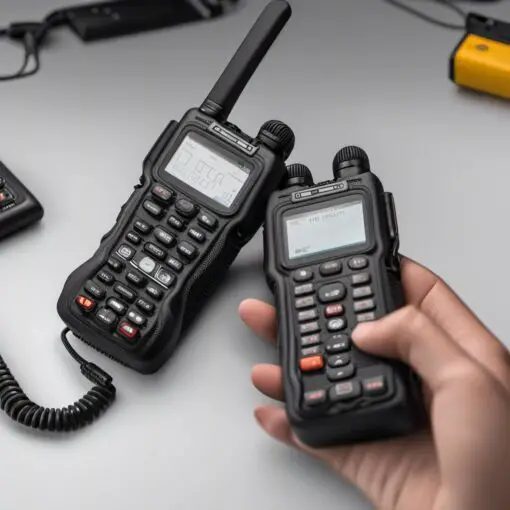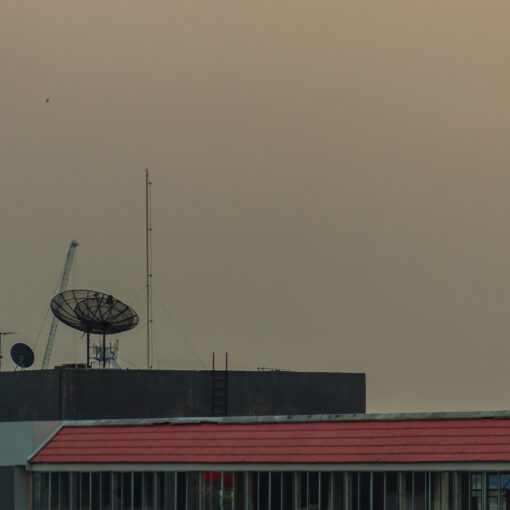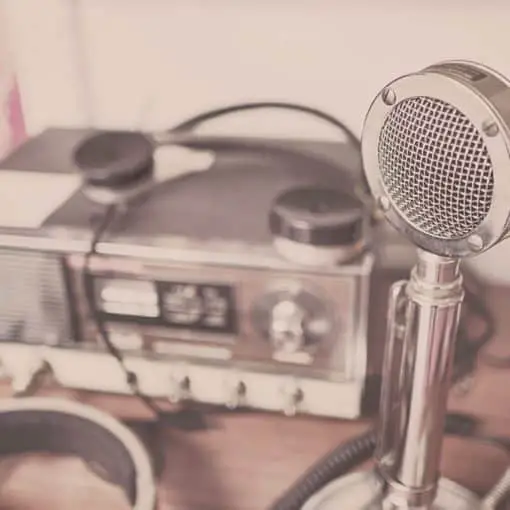
So you’ve caught the ham radio bug and you’re ready to set up your first home station. Good news: it’s easier than the forums make it look. This guide walks you through everything you need to get on the air, from the license to the first “hello” over the airwaves.
Think of your first home ham radio station like your first bicycle. You don’t need the carbon-fiber racing model. You need something that works, teaches you the ropes, and doesn’t empty your wallet.
Start With Your License (Yes, You Actually Need One)
Before you buy a single cable, get licensed. In most countries you legally need a license to transmit on the ham bands, and honestly, the studying makes you a far better operator anyway.
In the US, the entry-level Technician license gets you on the air with plenty of privileges. The test is 35 multiple-choice questions, and the entire pool of possible questions is public. Study apps and free practice tests do most of the heavy lifting. Most people pass after a week or two of casual studying.
Once you pass, you’ll get a call sign. That’s your on-air name, your identity, your badge of honor. Guard it well.
Pick the Right Radio to Start
Here’s where beginners spend way too much time overthinking. Let’s keep it simple.
For a first home station, you’ve got two sensible paths:
- A VHF/UHF mobile radio — great for talking to local repeaters and other hams in your area. Reliable, affordable, and hard to mess up.
- An HF radio — lets you talk across the country and sometimes across the world when conditions cooperate. More exciting, slightly more involved.
If you’re brand new, a lot of people start with a VHF/UHF setup to learn the basics, then add an HF radio once they’re hooked. There’s no wrong answer here. Start with what excites you, because an excited operator actually gets on the air.
Find a Spot for Your Station
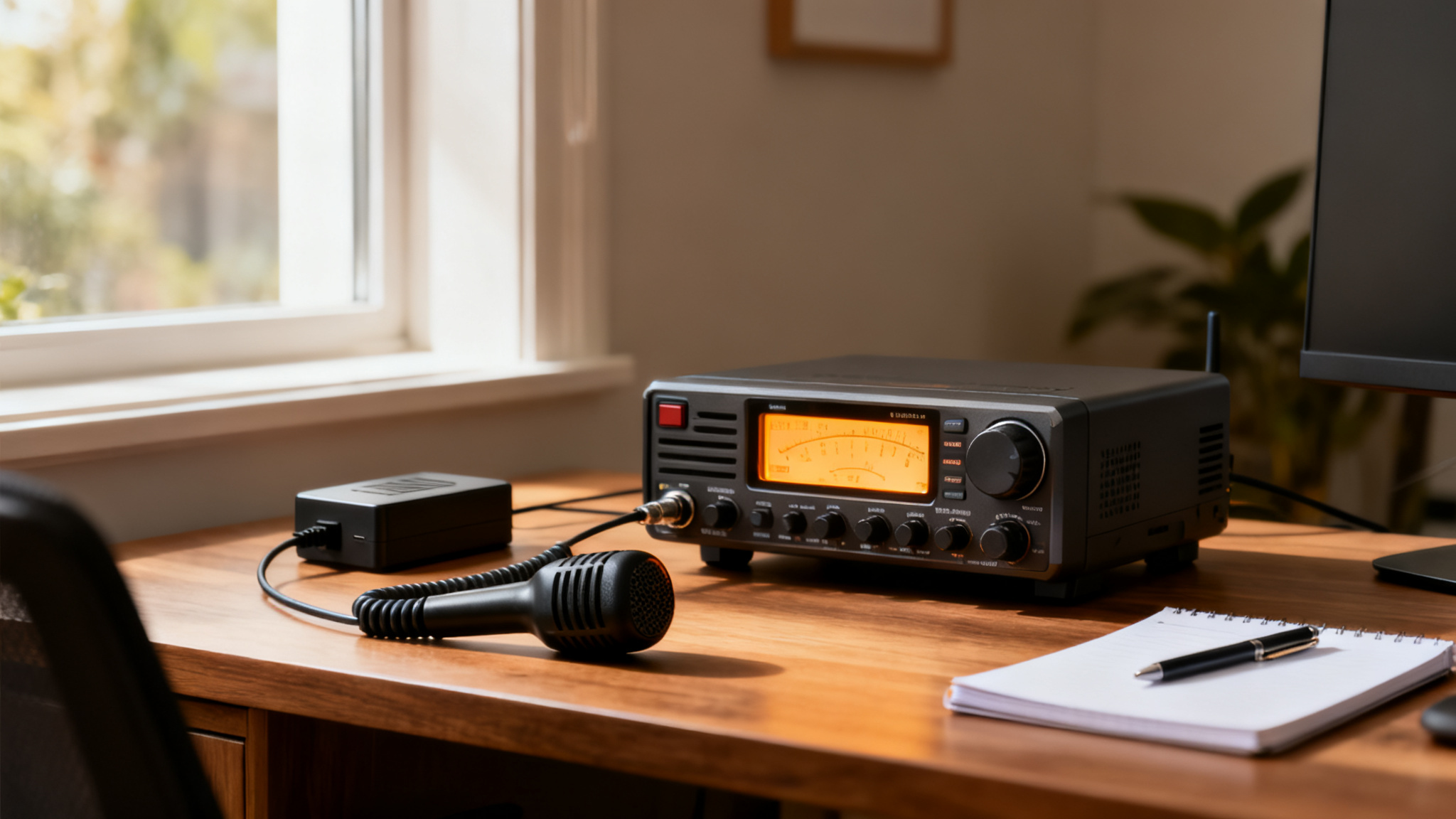
Your “station” is just the desk or corner where your radio lives. It doesn’t need to be fancy. It needs power, a bit of desk space, and a clear path for your antenna cable to reach outside.
A few things make life easier:
- A sturdy desk near an outside wall or window
- A power outlet nearby (more on power in a minute)
- A comfy chair, because you’ll be sitting there longer than you expect
Pro tip: keep a notepad handy. You’ll want to jot down call signs, frequencies, and the occasional “wow, I just talked to someone 2,000 miles away” moment.
The Antenna Is Everything
If you remember one thing from this whole guide, make it this: your antenna matters more than your radio. A cheap radio with a great antenna will outperform an expensive radio with a bad one, every single time.
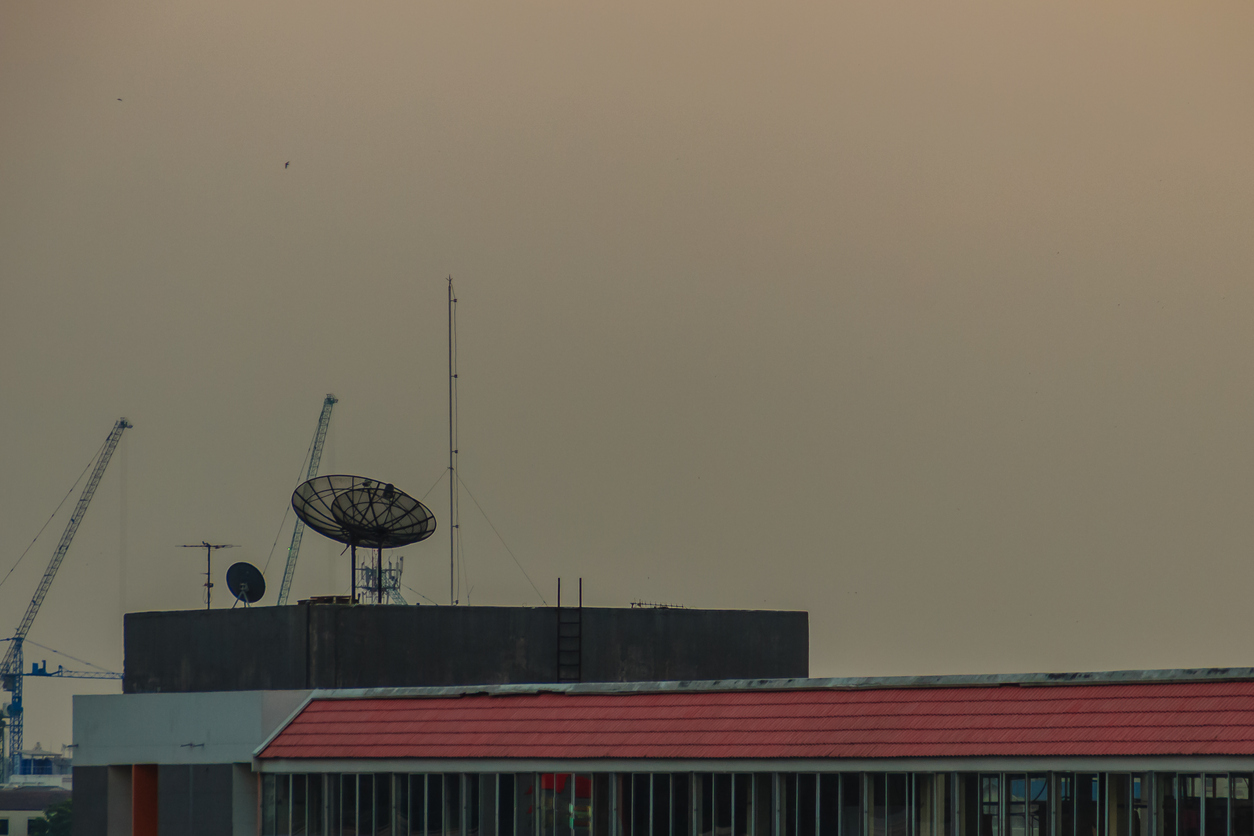
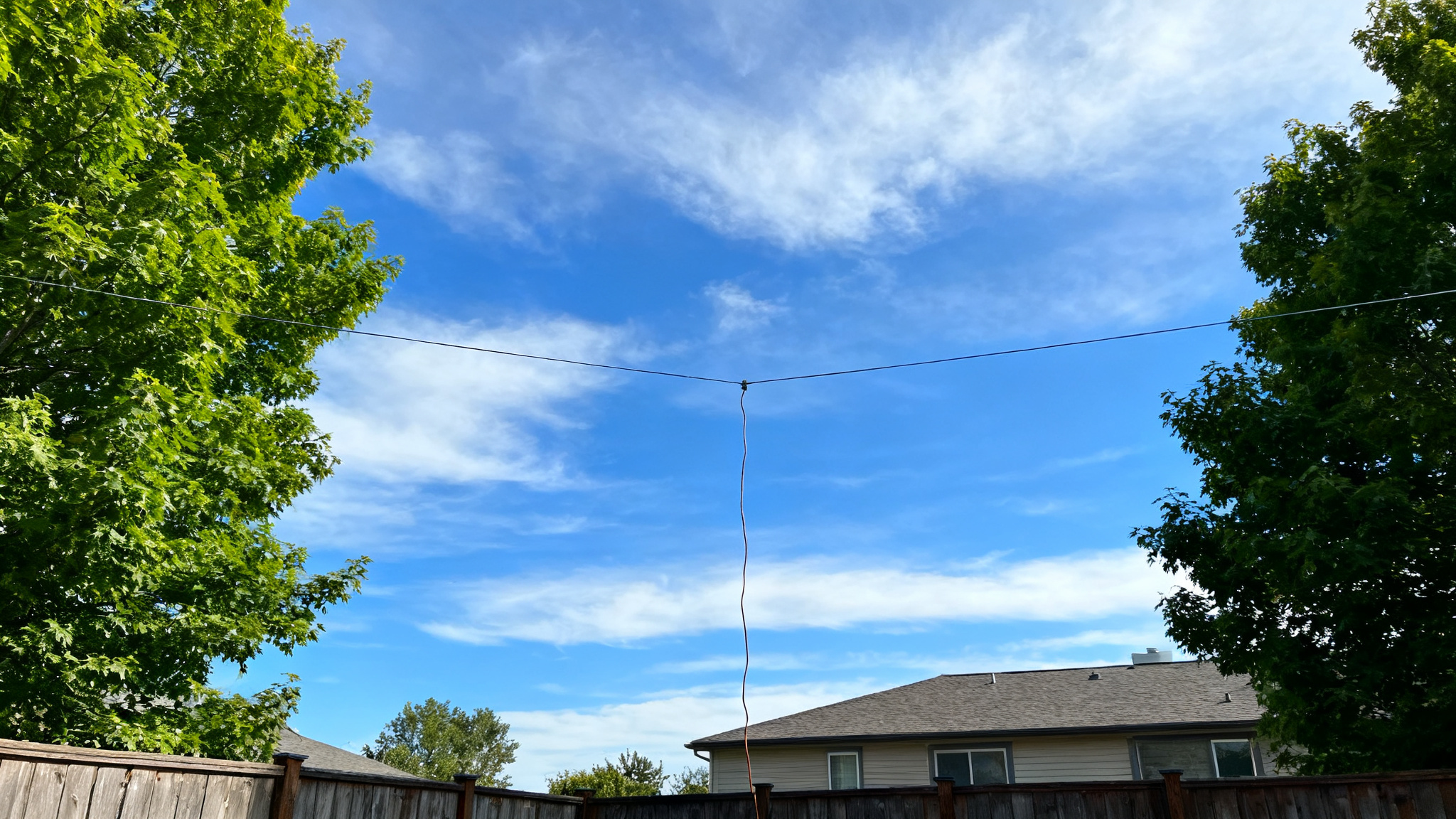
For VHF/UHF, a simple outdoor vertical antenna mounted as high as you can safely manage works wonders. For HF, a basic wire dipole strung between two trees or poles is a classic first antenna that costs almost nothing and performs beautifully.
Height is your friend. The higher and clearer your antenna, the further your signal travels. An antenna in the attic will work, but the same antenna on the roof will work better.
Power, Grounding, and Staying Safe
Most home ham radios run on 12 volts, which means you’ll need a power supply to convert your wall outlet’s power into something the radio can use. Pick one rated a little higher than your radio needs, so it never strains.
Grounding is the boring part everyone skips and later regrets. A proper ground protects your gear and, more importantly, you. Connect your equipment to a good ground rod, and if there’s a thunderstorm rolling in, disconnect your antenna. No contact is worth a lightning strike.
The best safety habit in ham radio is simple: when in doubt, unplug it.
Connect It All and Get On the Air
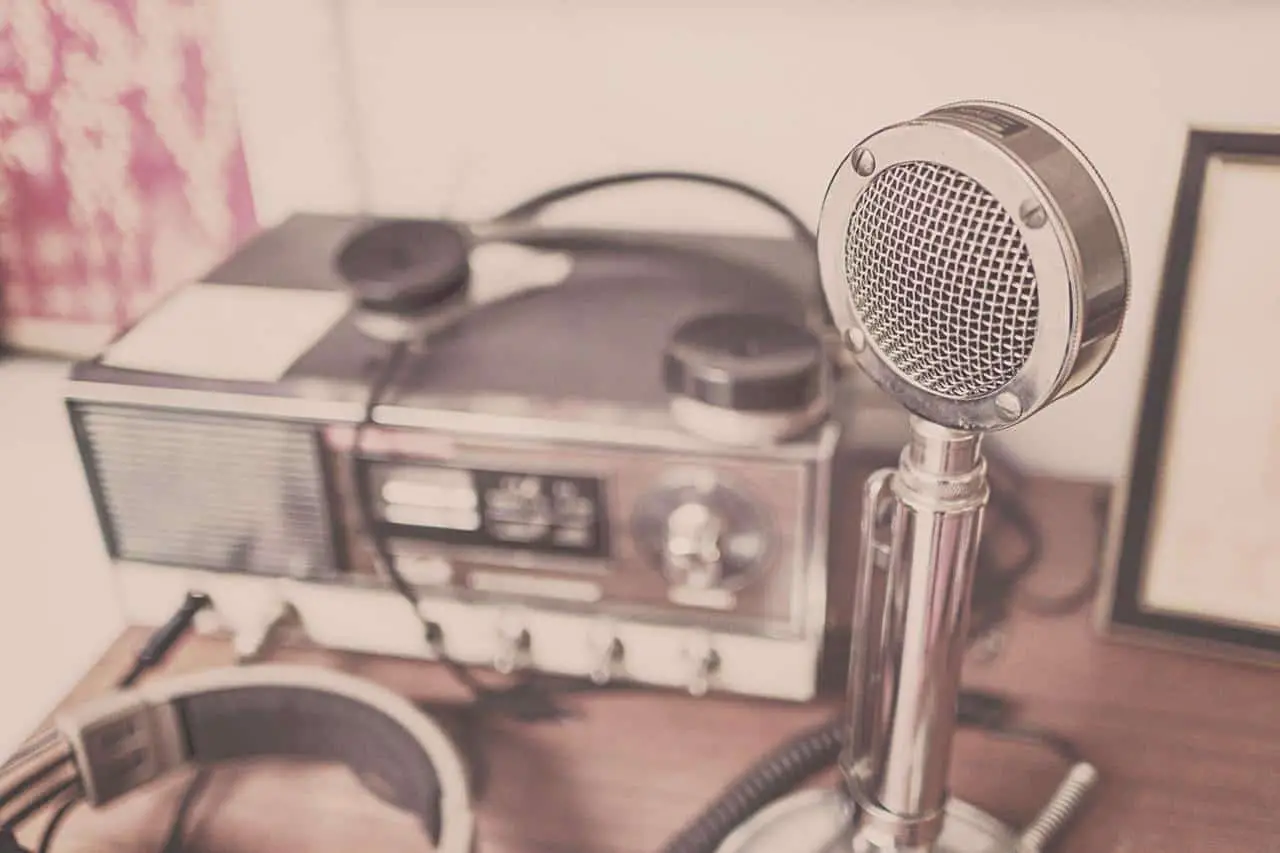
Now for the fun part. Connect your antenna cable to the radio, plug the radio into your power supply, and power it up. Program in a local repeater frequency (a quick online search for repeaters in your area gives you the numbers), key up the mic, and say your call sign.
Your first transmission will feel awkward. That’s completely normal. Everyone’s first “CQ” or repeater call sounds a little nervous. The ham community is famously welcoming, and someone will almost always answer with a friendly hello.
That first contact? It’s a feeling you don’t forget.
Ready to Set Up Your First Station?
Setting up your first home ham radio station comes down to five things: get licensed, pick a starter radio, find a spot, put up a decent antenna, and power it safely. Nail those and you’re on the air.
To make it even easier, we put together a free Ham Radio Quick-Start Checklist that walks you through every step in order, so nothing slips through the cracks. Grab your free checklist here, tick the boxes, and you’ll be making your first contact before you know it.