Your first time listening to a busy band, ham radio lingo sounds like a private language. People are trading numbers, throwing around three-letter codes, and calling each other “OM” like it’s completely normal. It is normal, and it’s easier to pick up than it sounds.
Here are 30 terms you’ll actually hear on the air, in plain English, grouped so they’re easy to remember.
What Ham Radio Lingo Actually Is (and Why It Exists)
Most of the shorthand comes from two places: Morse code and the military. When every letter you send has to be tapped out by hand, “QTH” beats “what is your location” by a mile. And when radio was mostly a professional job, the habits of professional operators leaked into the hobby and stayed.
So you end up with a mix. Some terms are genuinely useful shortcuts. Some are pure tradition that nobody’s willing to drop. Both are worth knowing, because you’ll hear them either way.
One thing to relax about: nobody expects you to sound like a 40-year veteran on day one. Plain speech is always allowed. Learn the lingo so you can understand it, and use whichever bits feel natural.
Ham Radio Lingo for People and Places (Terms 1–6)
- 1. Ham — An amateur radio operator. Nobody agrees where the word came from, and every explanation you’ll hear is probably wrong.
- 2. Elmer — An experienced ham who mentors newcomers. If you find a good one, treat them well. More on what an Elmer is here.
- 3. Shack — Wherever your radio lives. Could be a whole room, could be a corner of the kitchen table. Still a shack.
- 4. Rig — Your radio. “Nice rig” is a compliment about the equipment, not the person.
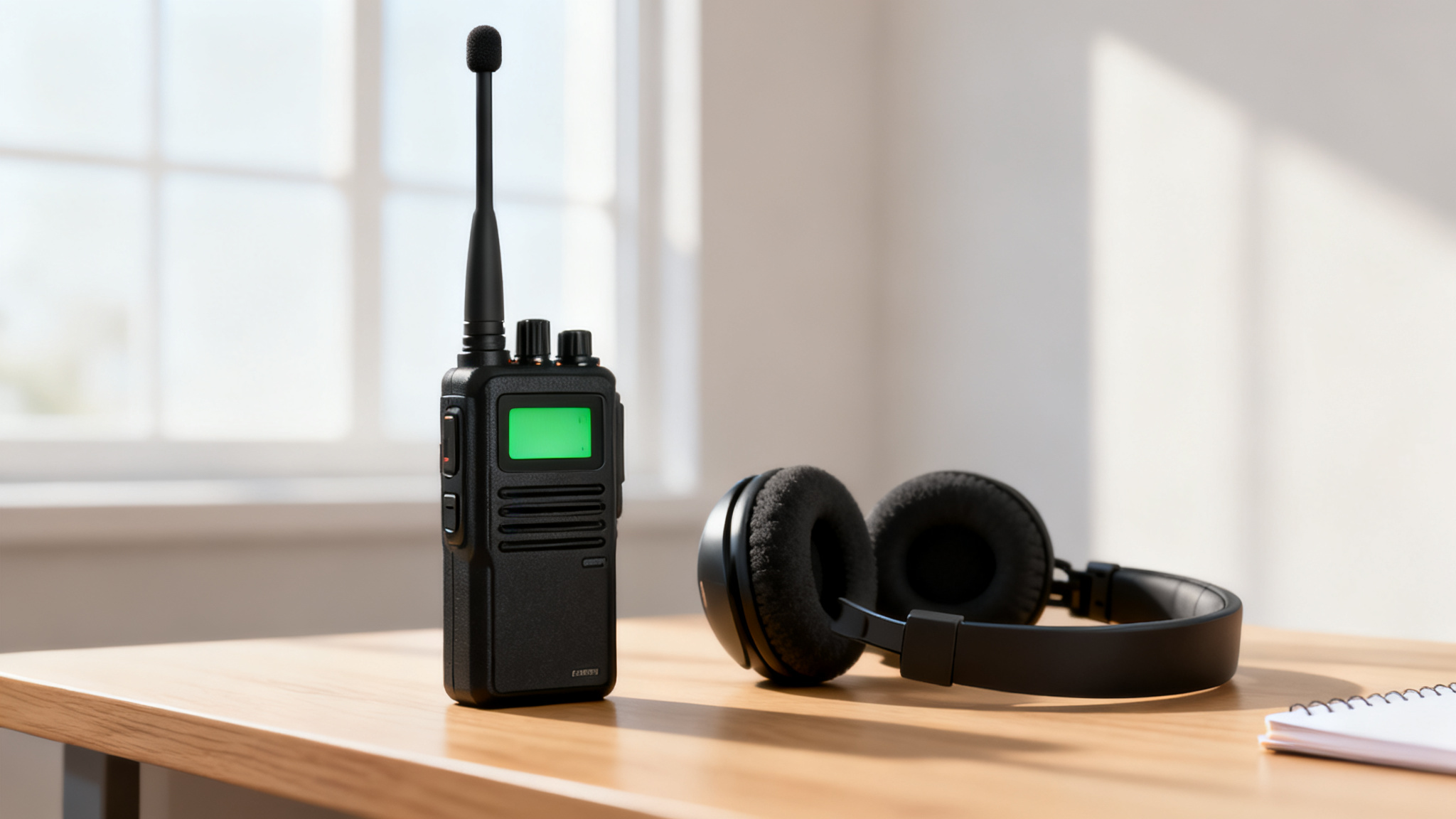
- 5. HT — Short for handie-talkie, meaning a handheld radio. Your first radio is almost certainly an HT.
- 6. YL and OM — YL means “young lady” (any woman operator, regardless of age) and OM means “old man” (any male operator, same deal). You’ll also hear XYL for an operator’s spouse. Yes, the terms are dated. Yes, they’re still everywhere.
Terms You’ll Hear Starting a Contact (7–13)
This is the lingo that turns a wall of noise into a conversation you can follow.
- 7. CQ — “Calling anyone who’ll answer.” When you hear “CQ CQ CQ, this is…” someone’s fishing for a contact. Answer them.
- 8. QSO — A contact, or a conversation, between two stations. “Thanks for the QSO.”
- 9. Ragchew — A long, relaxed chat with no particular purpose. The opposite of a quick contest exchange, and where most of the fun lives.
- 10. Handle — Your first name. “The handle here is Quinton.”
- 11. QSL — “Received and understood.” Also the name of the postcards hams mail each other to confirm a contact, a tradition that has stubbornly survived email.
- 12. 73 — “Best regards.” It’s how contacts end. Never say “73s” — the number is already plural, and someone will gently tell you so.
- 13. Over and Break — “Over” means “your turn to talk.” “Break” means you want to join a conversation already in progress, or that you have something urgent.
Want the full three-letter list? We’ve covered ham radio Q codes in their own guide.
Ham Radio Lingo for Signals and Conditions (14–20)
- 14. RST — The signal report: readability, strength, and tone. When someone says “you’re five nine,” they mean perfectly readable (5) and very strong (9). It’s the standard “how do I sound” answer.
- 15. S-meter — The needle or bar on your radio showing incoming signal strength in S-units, 1 through 9. Above 9 it’s measured in decibels over 9, so “20 over 9” means a very loud station indeed.
- 16. QRM — Interference made by people. Other stations, electric fences, a neighbour’s dodgy LED lights.
- 17. QRN — Interference made by nature. Mostly distant thunderstorms crackling away.
- 18. QSB — A signal fading up and down. Normal on long-distance contacts, and the reason people repeat themselves.
- 19. Propagation — How well radio waves are travelling today. Driven by the sun, the time of day, and the season. Hams check propagation the way farmers check weather.
- 20. Skip — Signals bouncing off the upper atmosphere and landing hundreds or thousands of kilometres away. Skip is why a modest station can reach another continent.
Chasing Distance: DX Lingo (21–25)
A big slice of the hobby is seeing how far you can reach, and it has its own vocabulary.
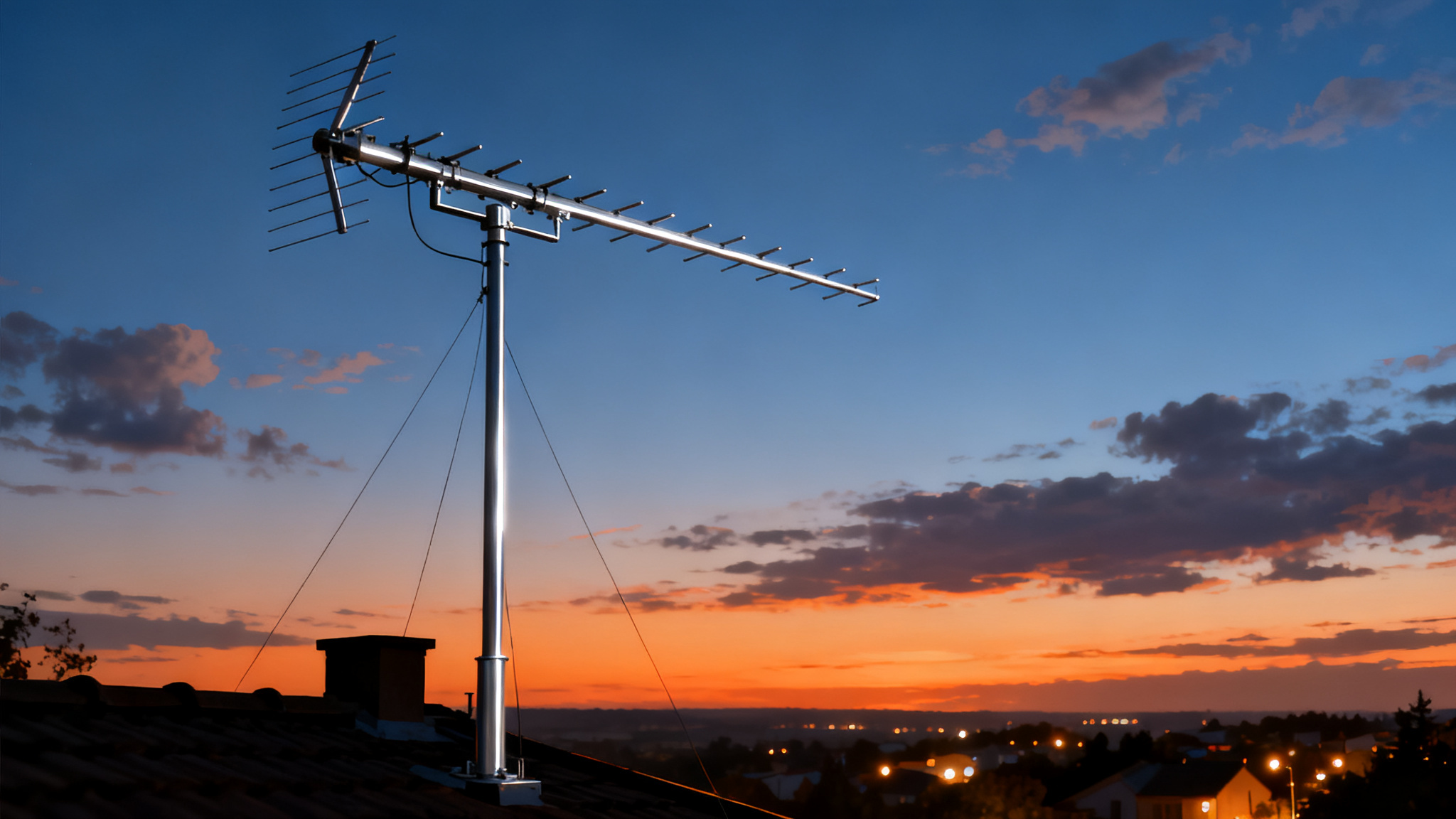
- 21. DX — Distance. A “DX contact” is a far-away one, usually another country.
- 22. DXpedition — A group of hams travelling to a remote island or rarely-active country specifically so everyone else can work them. Part holiday, part expedition, part public service.
- 23. Pileup — What happens when a rare station shows up and 300 people call at once. Sounds like chaos. Is chaos.
- 24. Working split — Listening on one frequency while transmitting on another. Rare stations do this to keep pileups manageable, which is why you sometimes hear a station you can’t seem to answer.
- 25. Grid square — A short code for your location, like JF95. Quicker than swapping town names and used heavily in contests and digital modes.
Modes and Operating Styles (26–30)
- 26. CW — Continuous wave, which is what hams call Morse code. Still going strong, because it punches through bad conditions when voice can’t. Here’s a fuller explanation of CW.
- 27. QRP — Deliberately running very low power, usually 5 watts or less, just to prove it can be done. QRP operators are the ultralight hikers of ham radio.
- 28. Net — A scheduled group conversation on a set frequency at a set time, run by a net control operator. Nets are one of the friendliest places for a beginner to check in.
- 29. POTA and SOTA — Parks On The Air and Summits On The Air. You take a radio to a park or a mountaintop, make contacts, and log it. Excellent excuse for a walk.
- 30. Kerchunking — Keying up a repeater without saying your callsign, just to hear it beep back. Mildly annoying to everyone listening. Now you know not to do it.
The Fastest Way to Learn Ham Radio Lingo
Don’t sit down with a list and try to memorise it. That’s a slow, joyless way to do it, and half the terms won’t stick.
Do this instead:
- Listen before you talk. Spend a few evenings tuning around. The same twenty terms come up constantly, and repetition teaches better than any list.
- Keep a cheat card by the radio. Everyone glances at notes. Nobody on the other end can see you doing it.
- Join a local net. Net control operators are used to new operators and will happily walk you through the format.
- Learn terms in sentences. “Going QRT for dinner” sticks. “QRT: I am closing my station” does not.
Give it two or three weeks of regular listening and you’ll stop translating in your head. It just becomes how radio sounds.
Ready to Get on the Air?
Knowing the lingo is one piece of the puzzle. The rest is getting licensed, picking a radio that won’t frustrate you, and actually making that first contact.
Our free New Ham’s Quick-Start Checklist lays out that whole path in order, so you always know what the next step is instead of guessing. Grab the free checklist on Ham Radio Planet and work through it one step at a time.