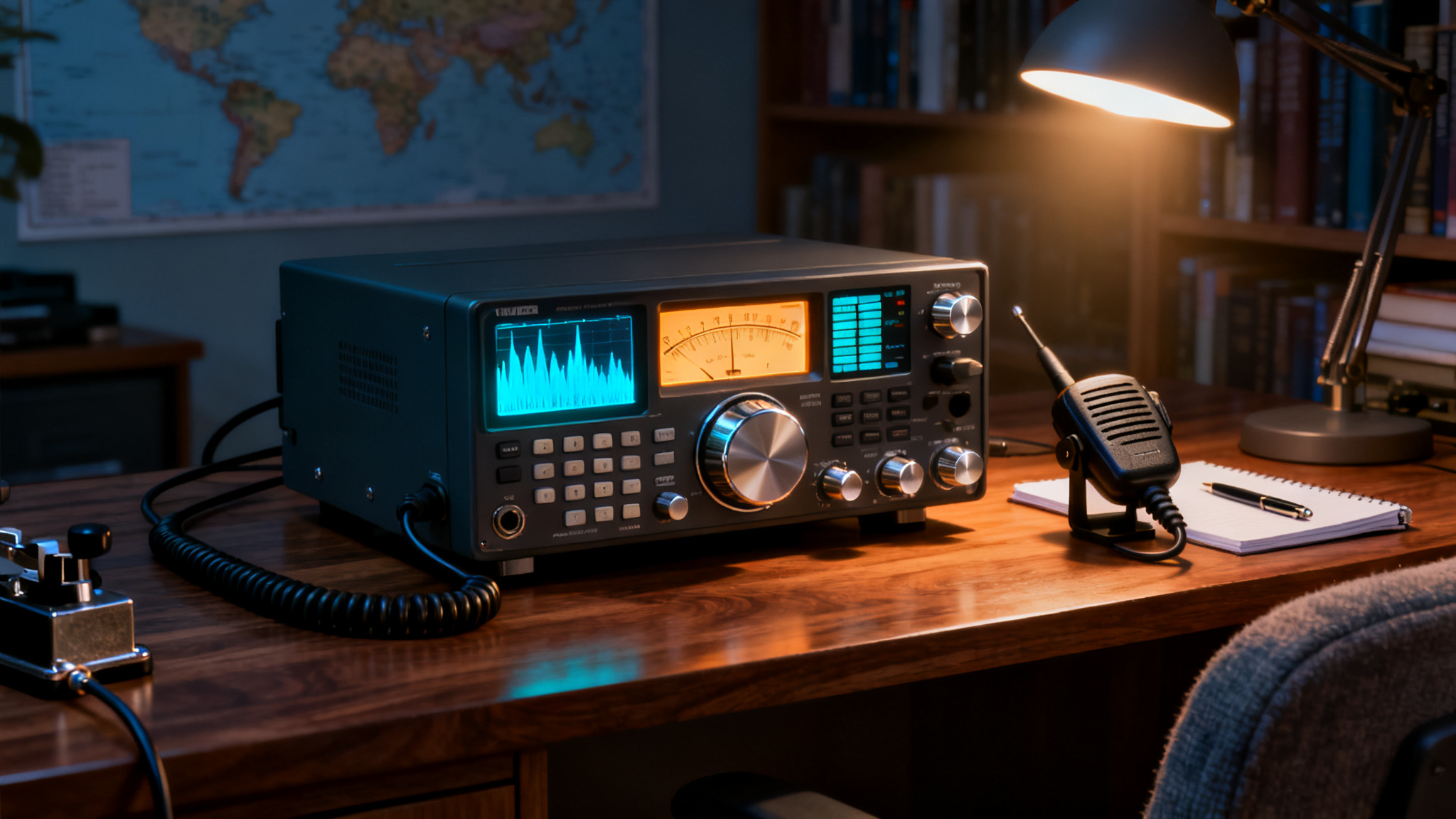
If you’ve been on the air for a while with a handheld, you’ve probably heard someone mention HF ham radio in the same tone people use for winning the lottery. Talking to Japan from a spare bedroom. Chatting with a stranger in Argentina while your coffee goes cold. This guide explains what HF actually is, what your current license lets you do with it, and whether upgrading is worth the effort.
Spoiler: the test is easier than the legend suggests.
What HF Actually Means
HF stands for “high frequency,” which is one of ham radio’s great naming mistakes. HF frequencies are actually the lower ones we use – roughly 3 to 30 MHz. The bands you hear people talk about (80 meters, 40, 20, 15, 10) all live in there.
Your handheld runs on VHF and UHF, which are much higher frequencies. Those signals travel in straight lines. They’re brilliant for talking across town through a repeater, and useless for talking across an ocean, because the Earth stubbornly keeps curving out of the way.
HF doesn’t play by that rule. And that’s the whole point.
The Sky Trick That Makes It Work
About 60 miles above your head sits a layer of charged particles called the ionosphere. The sun energises it all day long. Send an HF signal up into it at the right angle, on the right band, and instead of sailing off into space the signal bends back down to Earth – hundreds or thousands of miles from where it started.
Hams call this “skip.” Bounce once and you’re across the country. Bounce a couple of times and you’re on another continent, talking to someone you’ve never met about the weather and what antenna they’re using. (It’s always about the antenna.)
The catch is that the ionosphere is moody. It changes with the time of day, the season, and an 11-year solar cycle. A band that’s wide open at 2am might be dead at noon. Learning those rhythms is genuinely half the fun, and it’s why HF operators check space weather the way surfers check the swell.
What People Actually Do on HF
Once you’re down there, the hobby opens up in ways a handheld can’t match:
- DXing – chasing long-distance contacts and collecting countries. Some hams have worked well over 300 of them.
- Ragchewing – long, unhurried conversations with people hundreds of miles away.
- Contesting – weekend competitions to make as many contacts as possible. Fast, loud, weirdly addictive.
- Digital modes – modes like FT8 that let a tiny signal crawl through terrible conditions and still get through. You can work the world on less power than a nightlight uses.
- Emergency communication – when the internet, cell towers, and power grid all take the day off, HF keeps working.
That last one is why a lot of people upgrade. Local repeaters are great until the whole region loses power. HF doesn’t need any infrastructure at all – just you, a radio, some wire, and physics.
What a Technician License Gets You on HF
Here’s the part most beginners get wrong. They assume a Technician license means “no HF at all.” Not true – you already have a slice of it.
As a Technician in the US, you get:
- CW (Morse code) privileges on parts of 80, 40, and 15 meters
- Voice, data, and CW on parts of 10 meters
- Up to 200 watts on those HF segments
Ten meters is the fun one. When the solar cycle is behaving, 10 meters can go absolutely wild – worldwide contacts on modest gear. When it isn’t behaving, it can sit silent for weeks and make you wonder if your radio is broken.
So a Technician can taste HF. You just can’t order off the full menu, and you’re at the mercy of one band’s mood swings.
What Changes When You Upgrade to General
The General class license is where HF really opens up, and the jump is bigger than most people expect. You go from a handful of narrow segments to voice privileges on essentially every HF band: 160, 80, 60, 40, 30, 20, 17, 15, 12, and 10 meters. Power goes up to the legal limit of 1,500 watts, though almost nobody needs anywhere near that.
The band that matters most is 20 meters. It’s the workhorse of worldwide HF – reliable during daylight, busy with operators from everywhere, and forgiving of a simple antenna. As a Technician you can’t touch it. As a General, it’s yours, and it’s the band where most people make their first genuinely long-distance contact.
You also stop being dependent on solar conditions. If one band is dead, you slide to another. That flexibility is the real prize – not the extra power.
Is the General Exam Actually Hard?
It’s a 35-question multiple-choice test, and you need 26 right to pass. That’s it. There’s no Morse code requirement – that went away back in 2007, though the myth refuses to die.
The whole question pool is published in advance. Every possible question, with every answer. Most people study with free practice tests for two to four weeks, take the exam when they’re consistently scoring in the 80s, and pass on the first try. Plenty of people study for a fortnight and walk out with a new license.
The material is a step up from Technician – a bit more on antennas, propagation, and how signals behave. But it’s the sort of step up you make by reading and practising, not by getting a physics degree.
Cost is refreshingly boring: an exam session usually runs around $15. And because you’re upgrading rather than applying for a brand-new license, the FCC’s $35 application fee doesn’t apply.
So Should You Upgrade?
Ask yourself one question: do I want to talk to people far away?
If yes, upgrade. There’s no clever argument against it. You’ll spend a few weeks studying, about the cost of a pizza, and an afternoon at a test session – and in exchange you unlock the part of the hobby that makes people fall in love with it.
If you’re perfectly happy chatting on local repeaters, doing public service events, and keeping things simple, there’s nothing wrong with staying put. Technician is a real license, not a learner’s permit. Plenty of hams stay there for decades and enjoy every minute.
But if you’ve ever caught yourself listening to someone describe a contact with New Zealand and felt a small pang of envy, that’s your answer.
Getting Started on HF Without Spending a Fortune
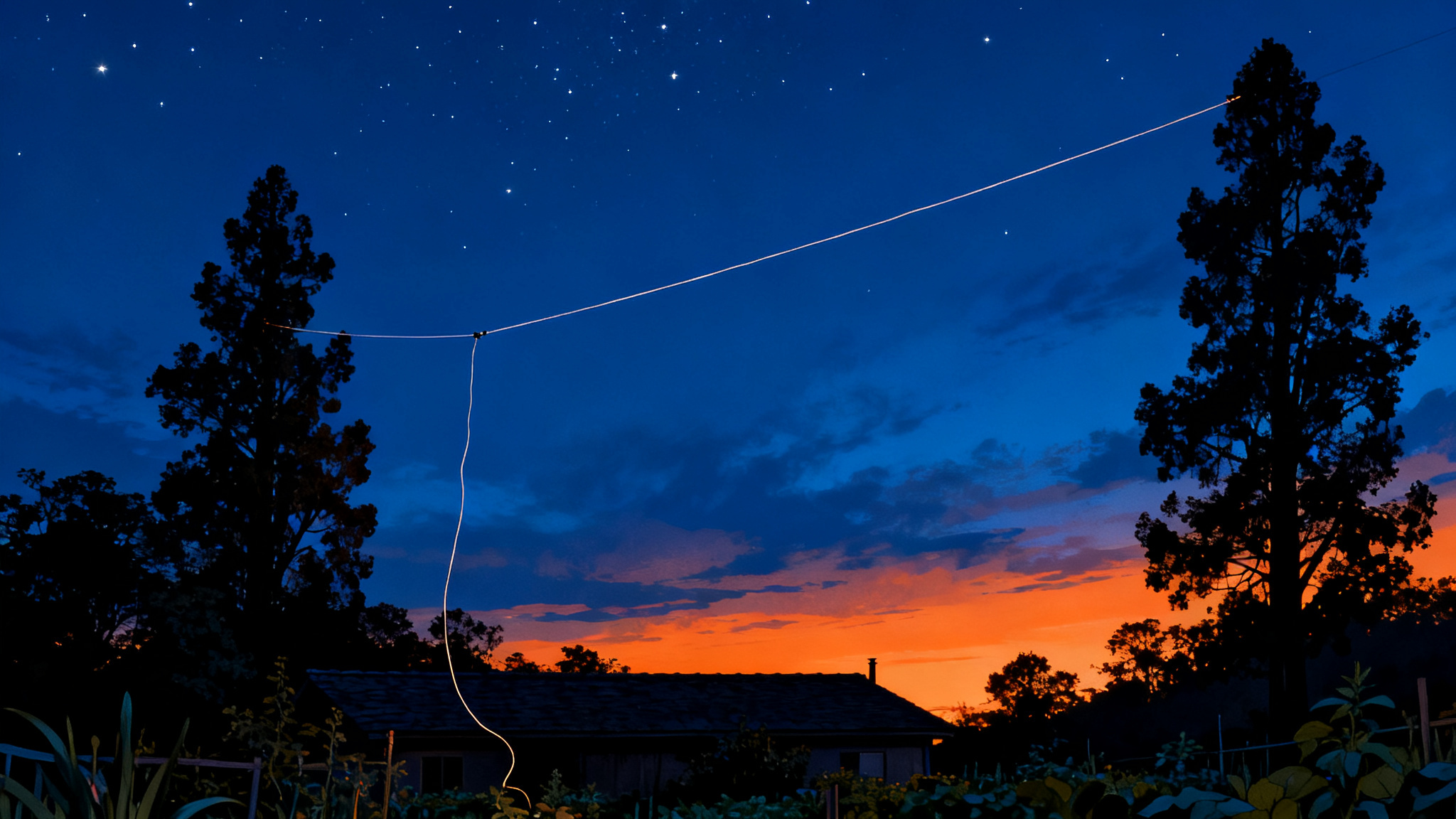
You don’t need a wall of expensive equipment. A used HF radio and a length of wire in the backyard has worked the world more times than anyone can count. The antenna matters far more than the radio – a simple dipole strung up as high as you can manage will beat an expensive rig connected to a bad antenna every single time.
Study for the General exam first. Then buy the radio. Doing it in that order stops you from owning a beautiful HF rig you’re not yet licensed to use, which is a special kind of frustrating.
Ready to Get on the Air?
HF is where ham radio stops being a gadget and starts being an adventure. But you’ve got to get the basics right first – the licence, the gear, and that all-important first contact.
We put together a free Ham Radio Quick-Start Checklist that walks you through exactly what to buy, how to get licensed, and how to make your first contact without the guesswork. Grab your free checklist here and start working your way toward the HF bands.